Systemic Explorer / Speculative Envisioner / Strategic Planner
Socio-ecological Design & Innovation
Collaborators: Bureau Moeilijke Dingen, Van Gogh Nationaal Park & DAS Amsterdam
Design Research Project - 2025
Exploring the Worlds of Socio-ecological Innovation Navigated by Design Philosophy Correspondence
Within the design and design research community, the topic of sustainable design is increasingly exploring how we, as designers, can actively include the environment in the design process. Inspired by the practices and attitudes of more-than-human designers, this research seeks to uncover new ways to design for societal change while integrating the environment into multistakeholder decision-making processes.
Multi-stakeholder tool development / Sustainable innovation & systems thinking / Leadership in design research
Approach
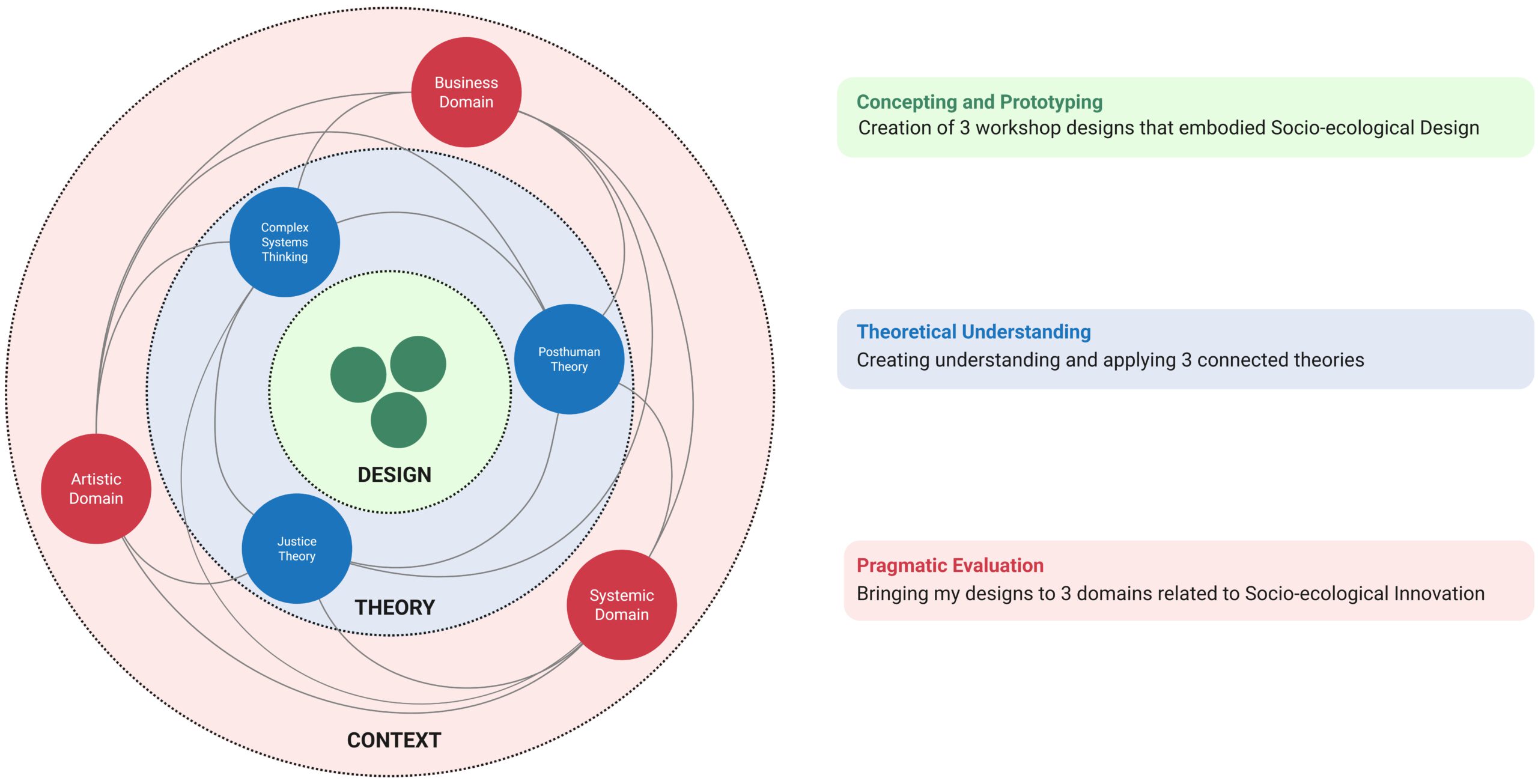
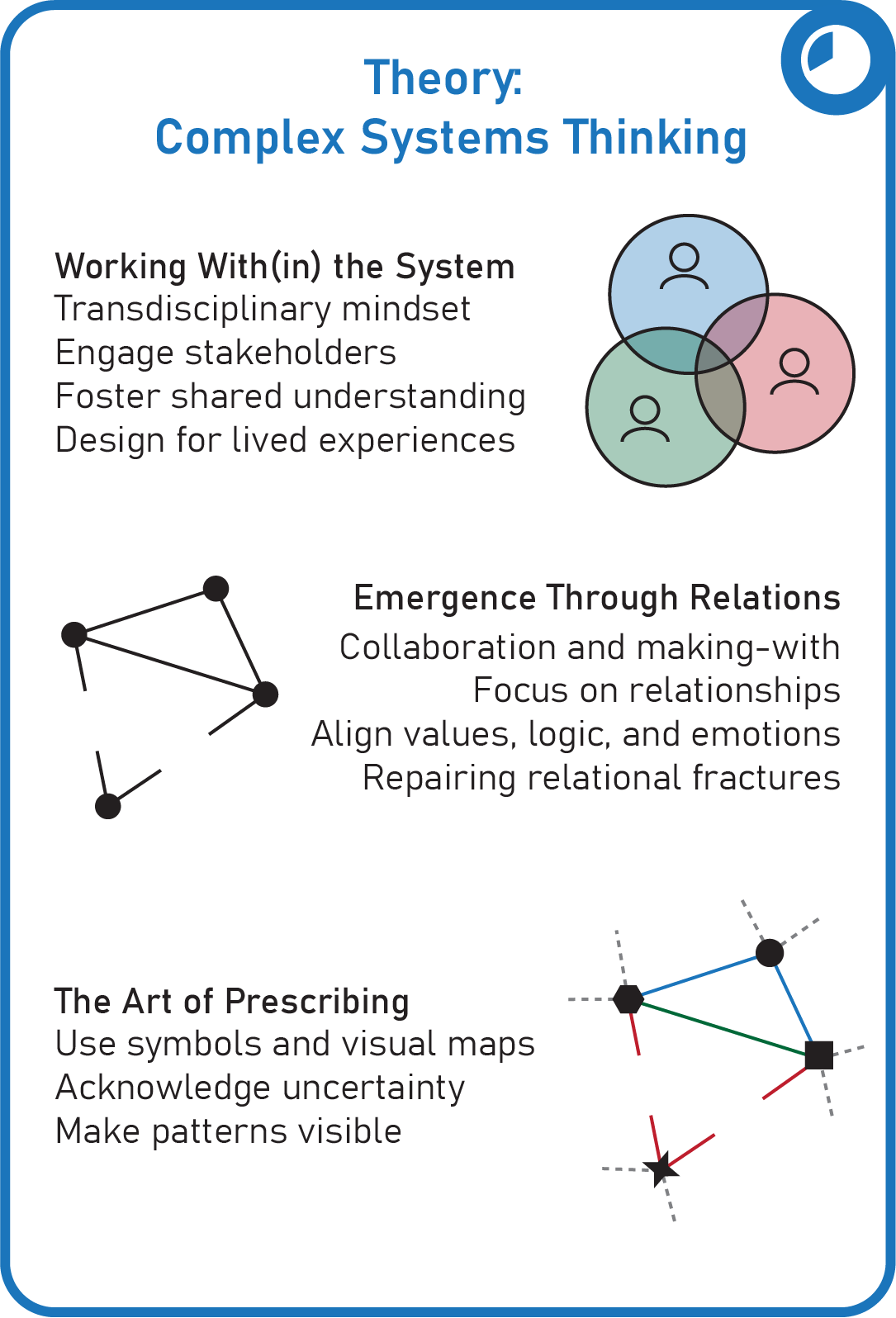
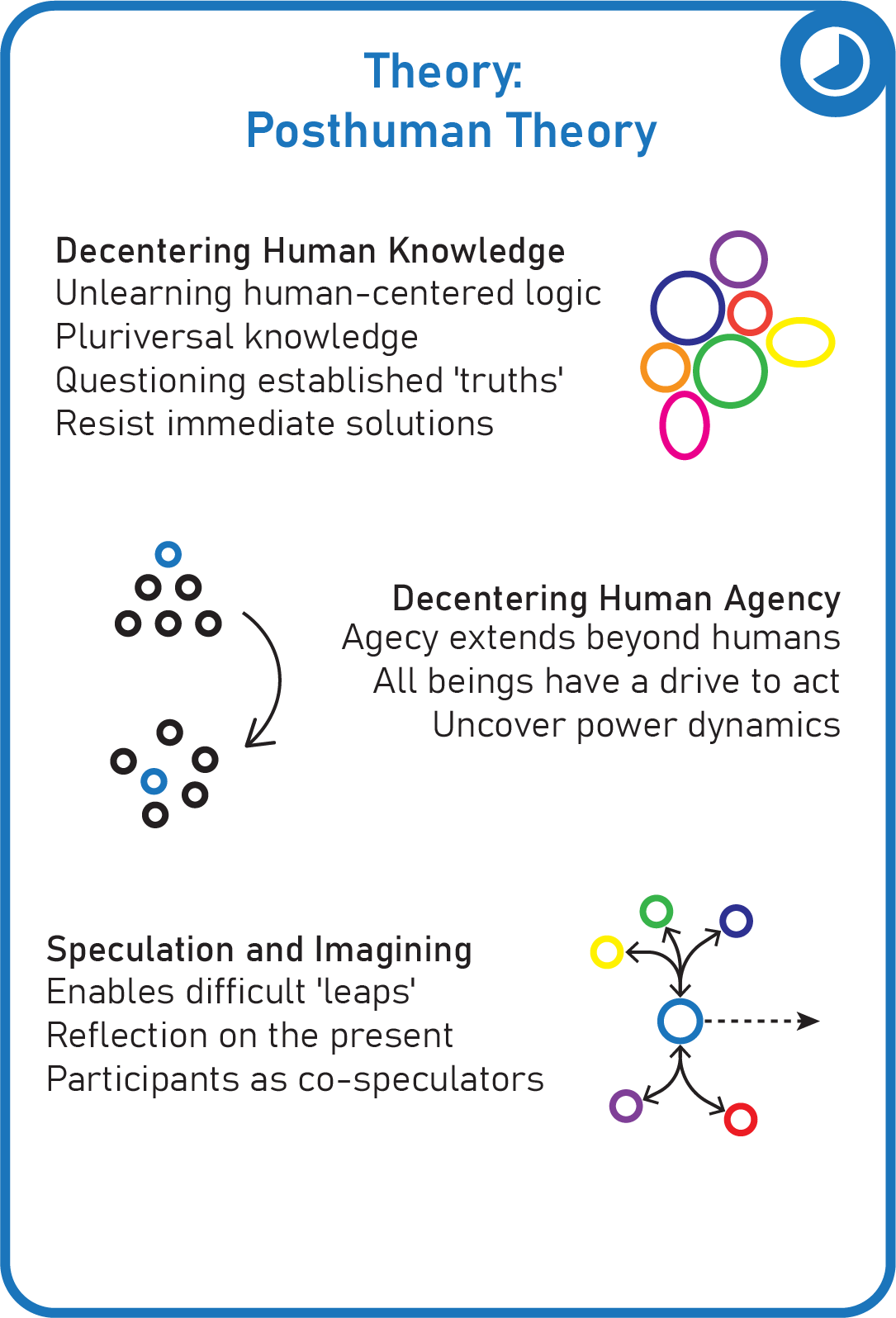
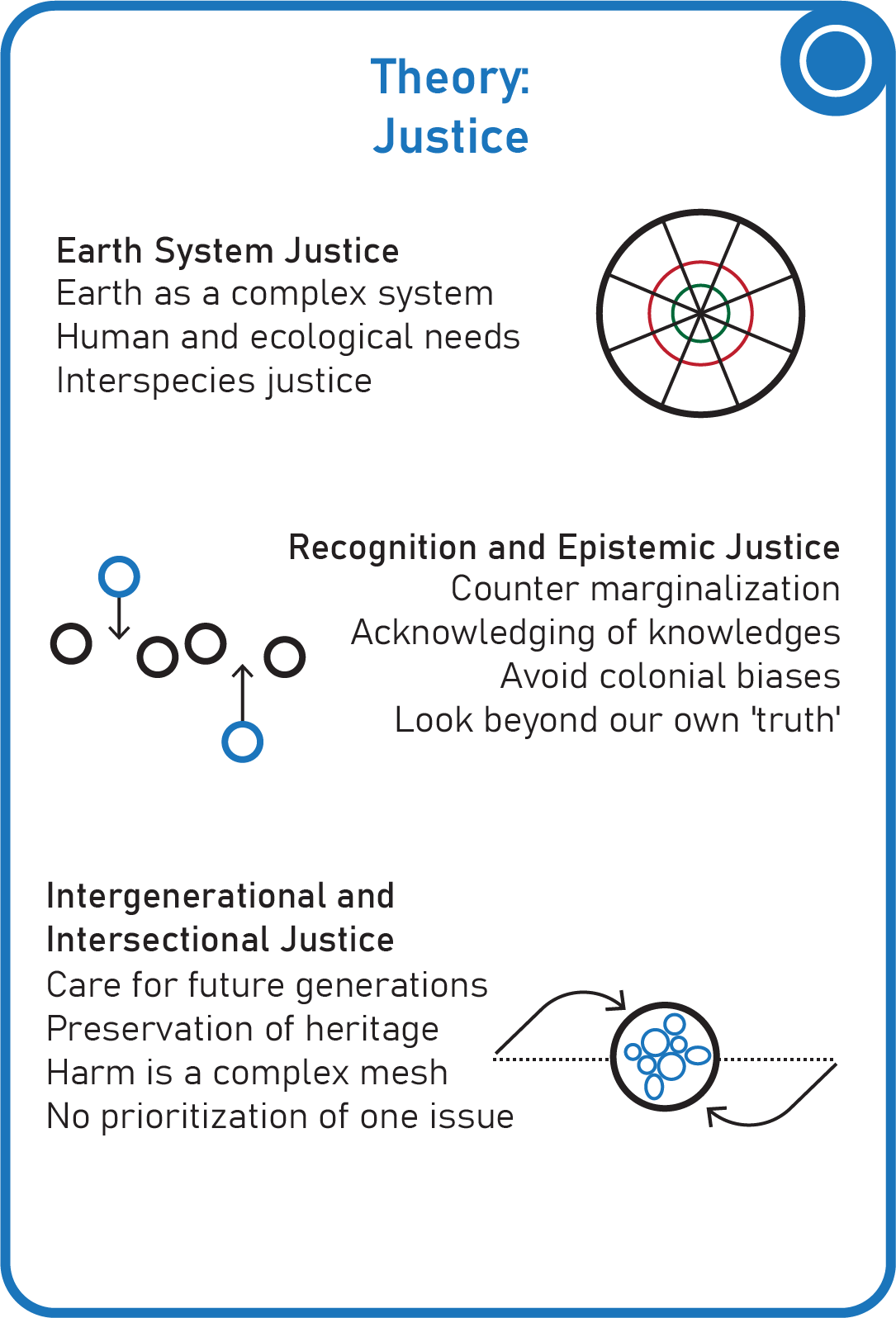
Drawing from the Design Philosophy Correspondence method, I treated three theories; complex systems thinking, posthuman theory, and earth system justice, as well as their underlying philosophies, as active materials in the design process. Through iterative cycles of theory exploration, prototyping, and collaboration with experts across business, governance, and art, I created interventions that connect conceptual understanding with tangible outcomes. This reflective and relational way of working allowed me to design for deeper understanding on how these theories relate to socio-ecological design & innovation.
Process
DESIGN RESEARCH ACTIVITIES
Theory Exploration
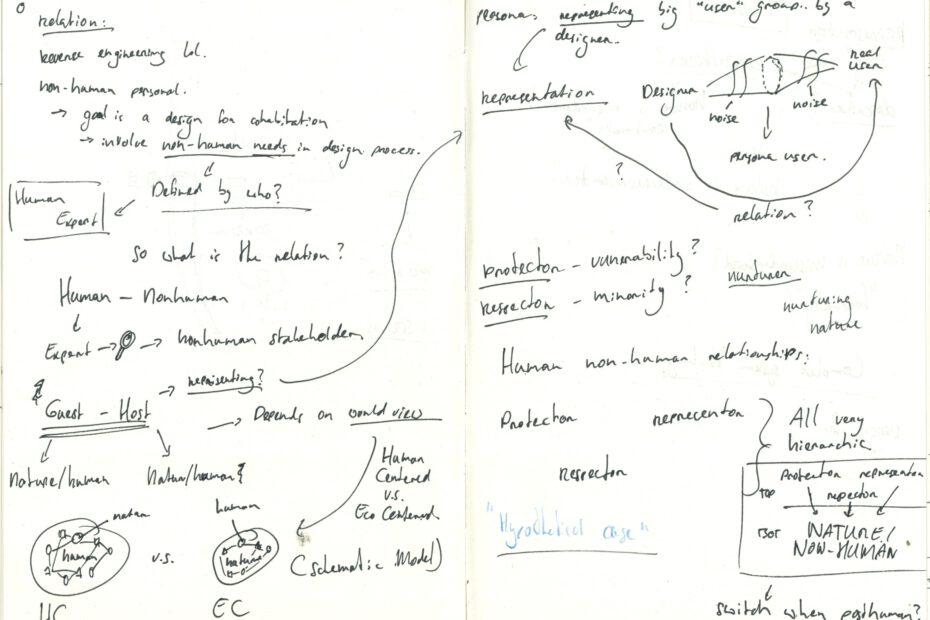
The approach used theory as a generative tool to open new perspectives on Socio-ecological Design. Drawing on Complex Systems Thinking, Posthuman Theory, and Justice Theory, I engaged with experts through interviews, discussions, and critiques to translate abstract ideas into tangible design explorations. I collaborated with Laura Niño, Doenja Oogjes, and Gabriele Ferri. This process was aimed to be iterative and dialogical, treating design as a form of correspondence with theory, where insights from practice reshaped understanding, and vice versa.


Concepting & Prototyping
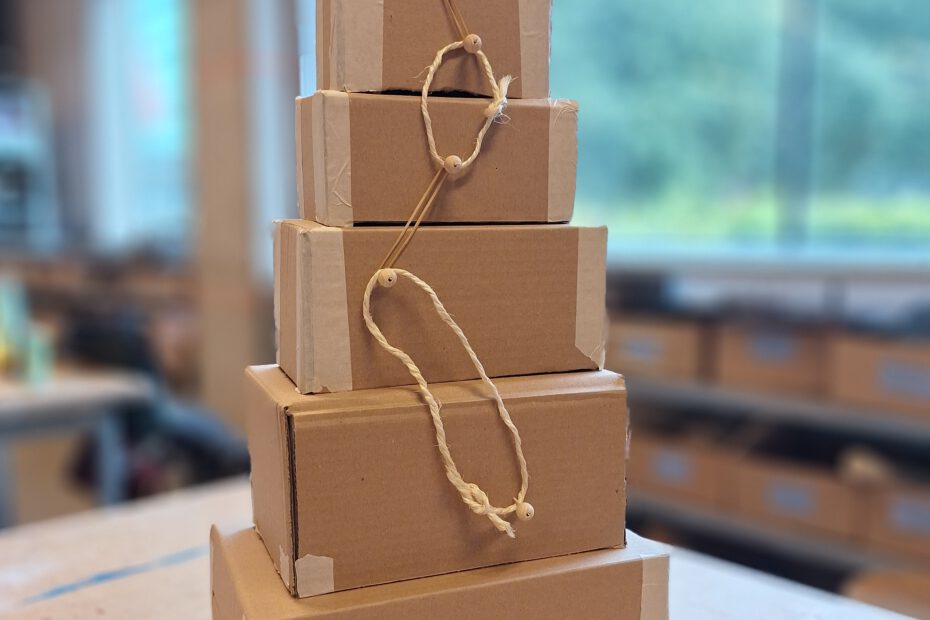
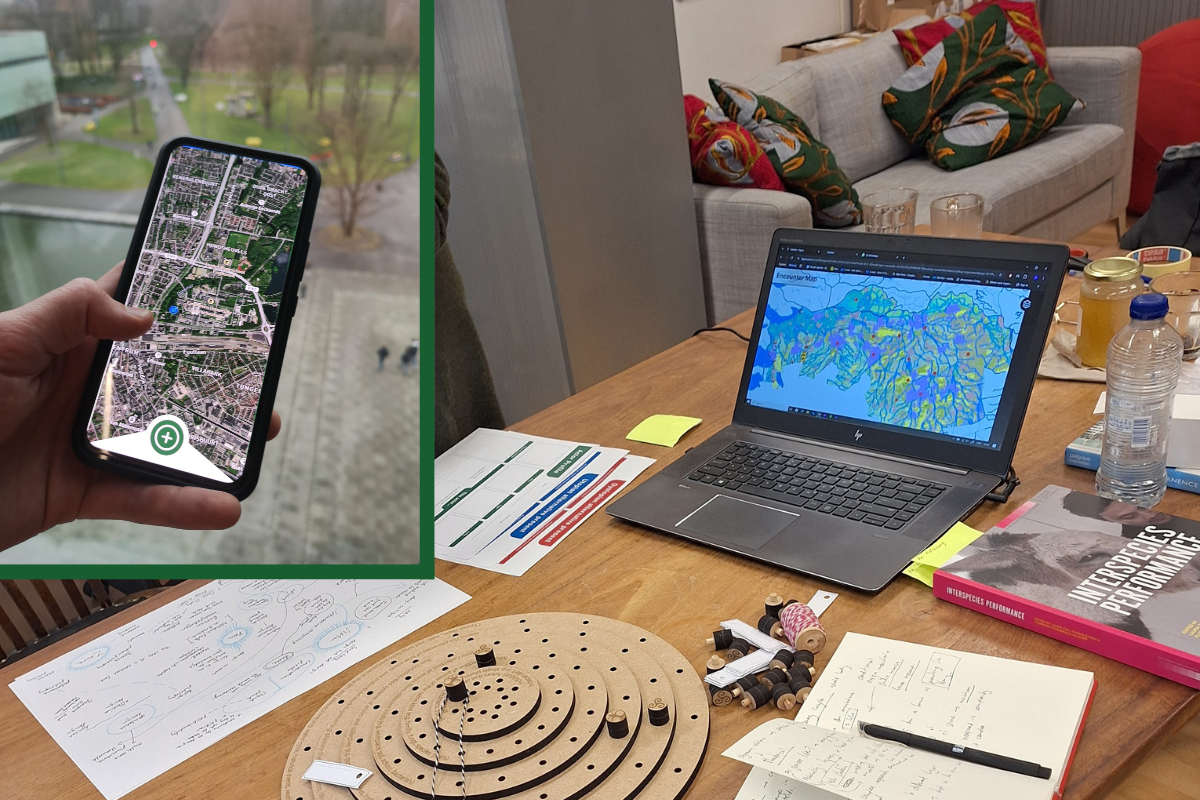
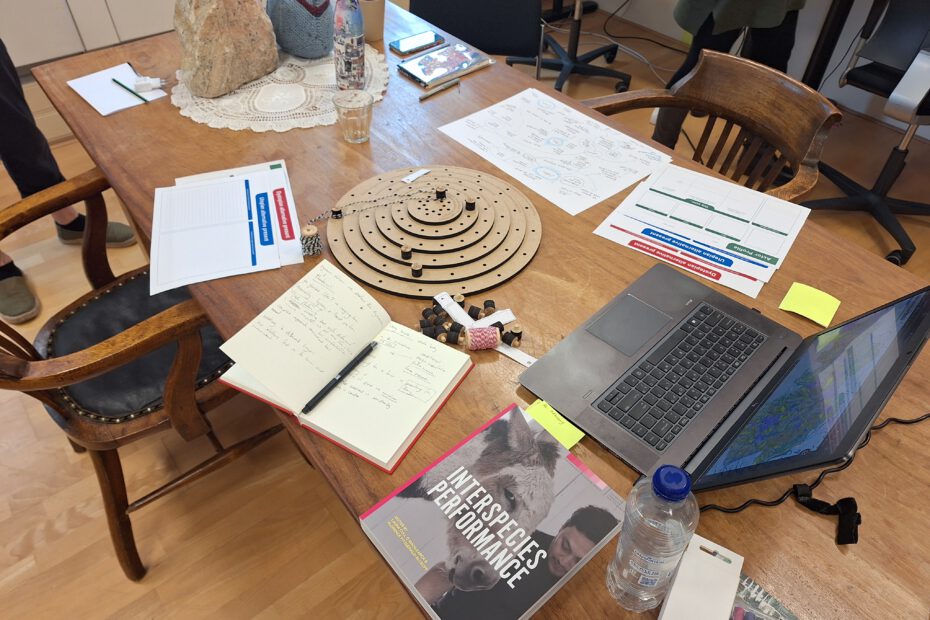
Guided by an ecological and relational mindset I continuously moved between conceptual reflection and material exploration. I re-mixed and re-contextualized ideas through iterative making activities such as sketching, moodboarding, and cardboard modelling. The prototypes became central tools for inquiry, constructed not as final solutions but as open-ended artefacts for discovery and reflection.
Collaboration & Evaluation
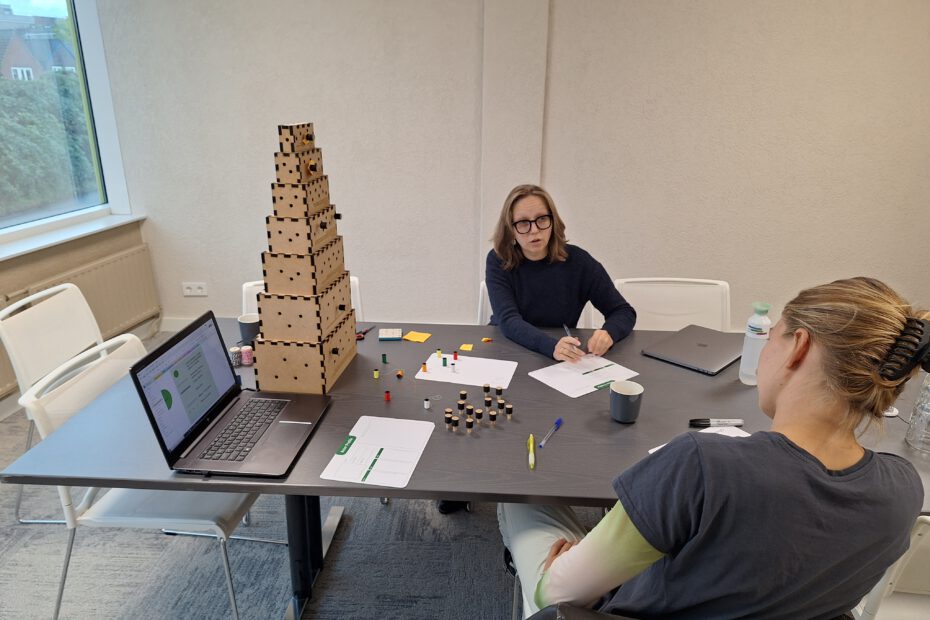
I collaborated with diverse pragmatic experts, including the design agency Bureau Moeilijke Dingen, Van Gogh National Park, and the Academy of Theatre and Dance. Each evaluation session combined research presentation, prototype-driven critique, and co-design dialogue, to test assumptions, identify limitations, and uncover new opportunities. Through open-ended discussions, I applied analytical and synthesis skills to translate expert insights into actionable design directions, while also fostering collective creativity.


Outcome
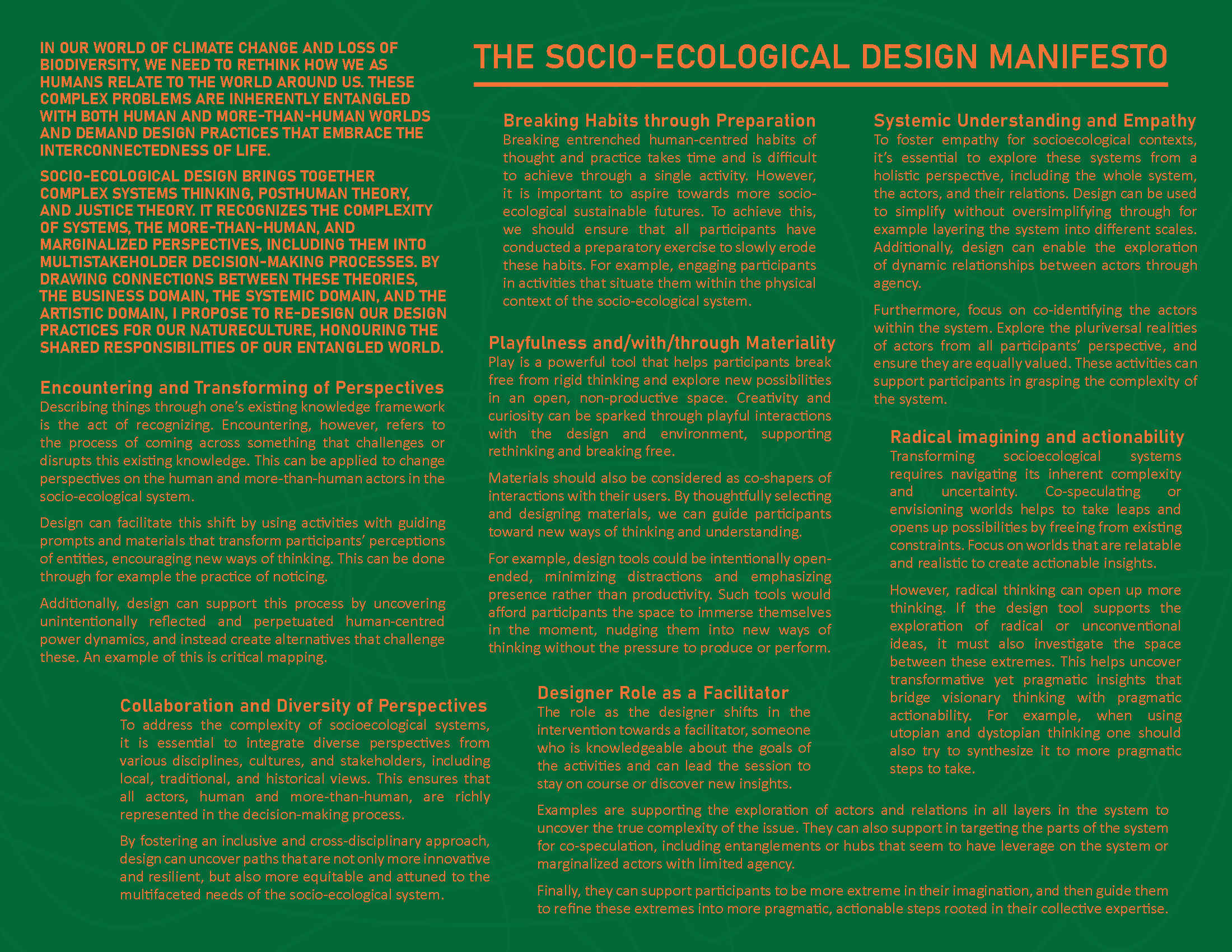
The result of this project was aimed to create new understanding of Socio-ecological Design in both design and words. This means that both the final tool was presented, as well as a Socio-Ecological Design manifesto.
FINAL TOOL
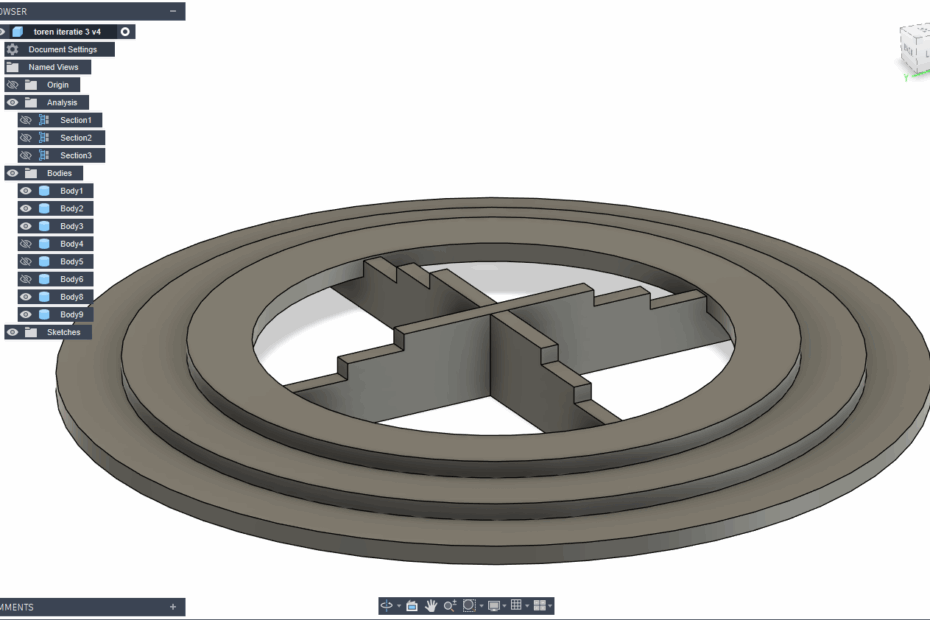
The concept was scoped to be a supportive tool to address complex socio-ecological challenges. It developed from an actor mapping tool in the first iteration, towards a tool to support multi-stakeholder decision-making, including three activities.
Activity 1: Multispecies Rethinking
Activity 2: Actor Mapping
Activity 3: Speculative Reimagining
Activity 1: Multispecies Rethinking
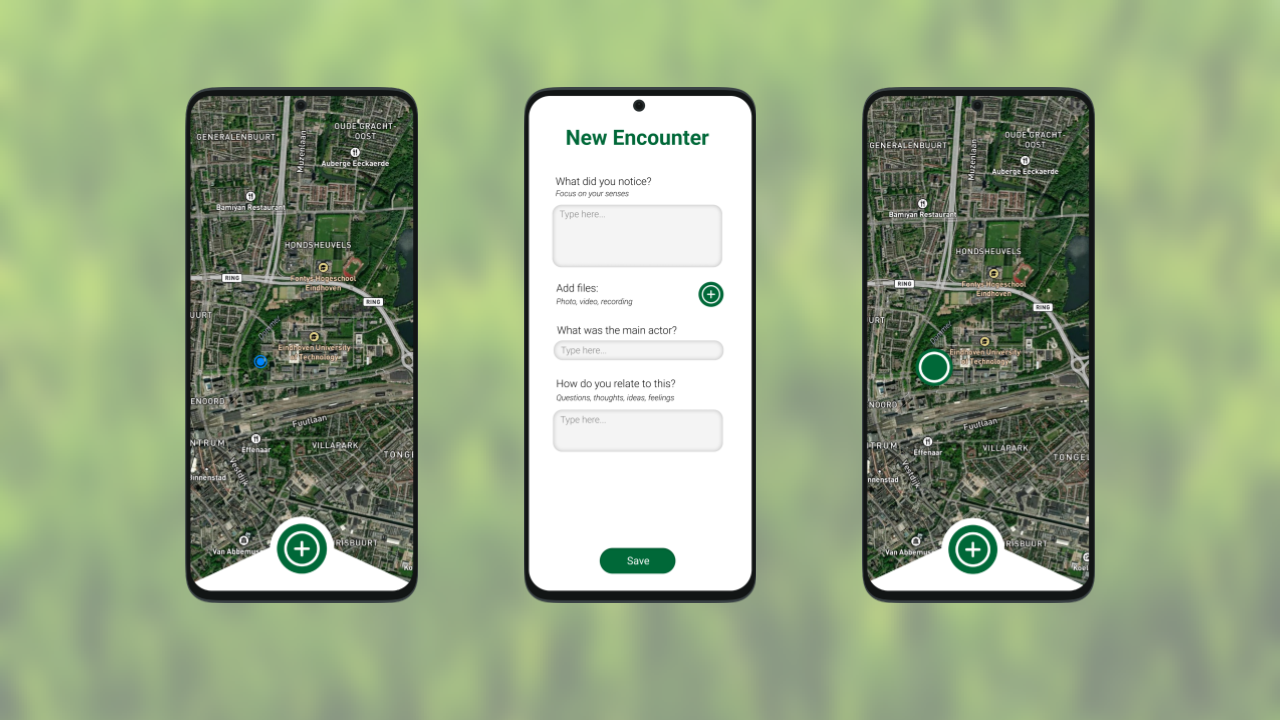
In this preparatory activity, the participators are asked to entangle themselves within the spatial context of the relating issue or problem case. Using a web-app they are asked to immerse themselves, take field notes using their senses, and relate to these encounters.
Activity 2: Actor Mapping
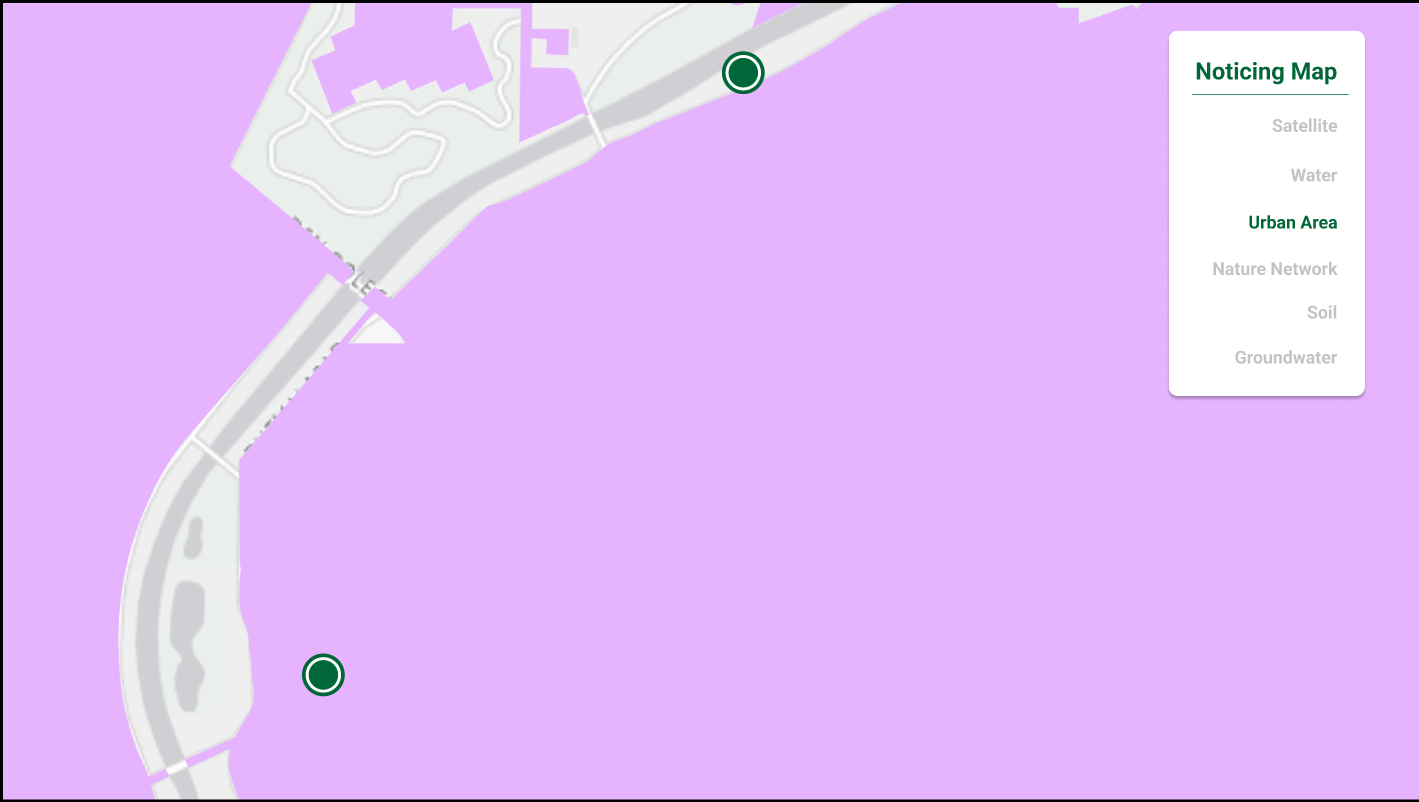
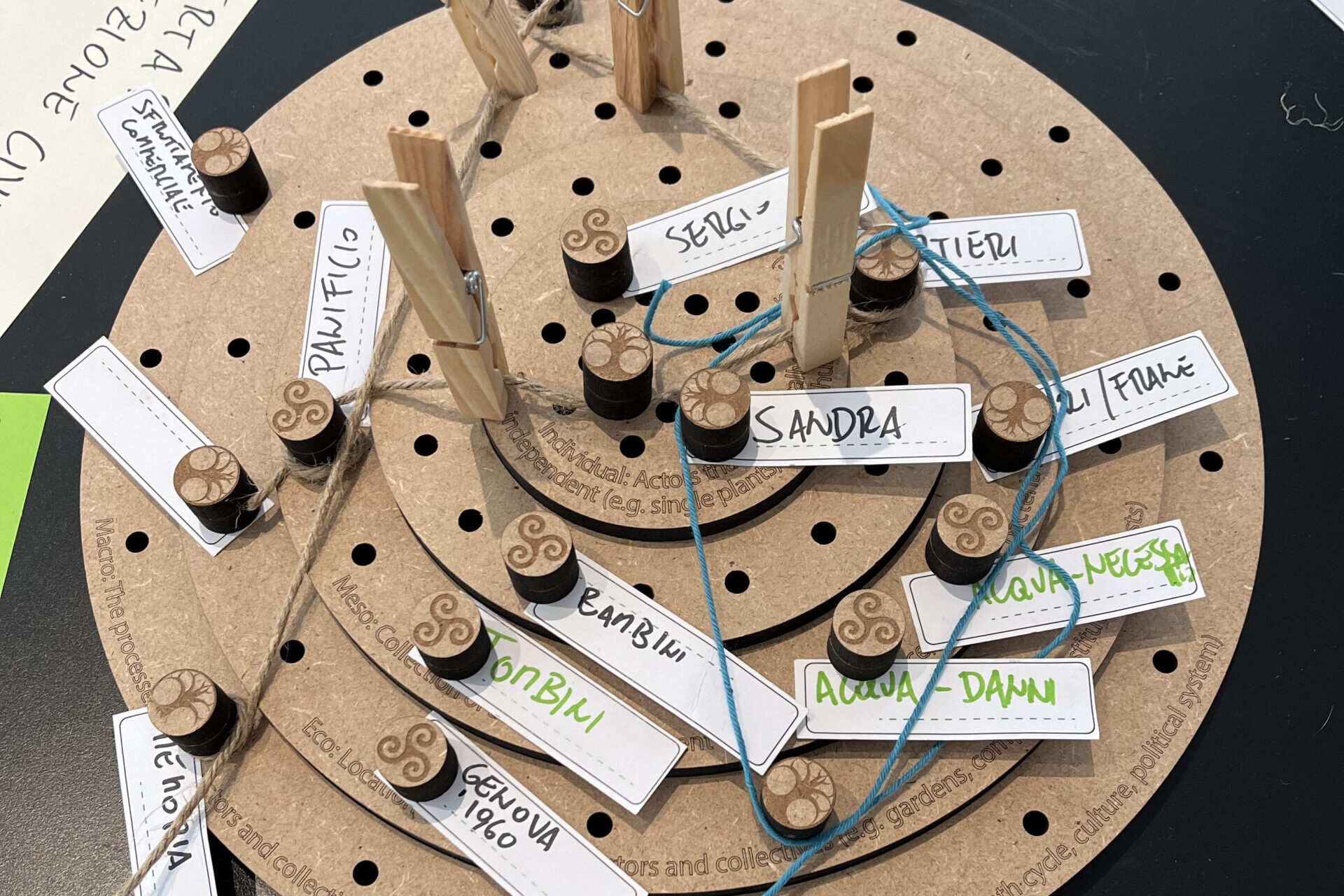
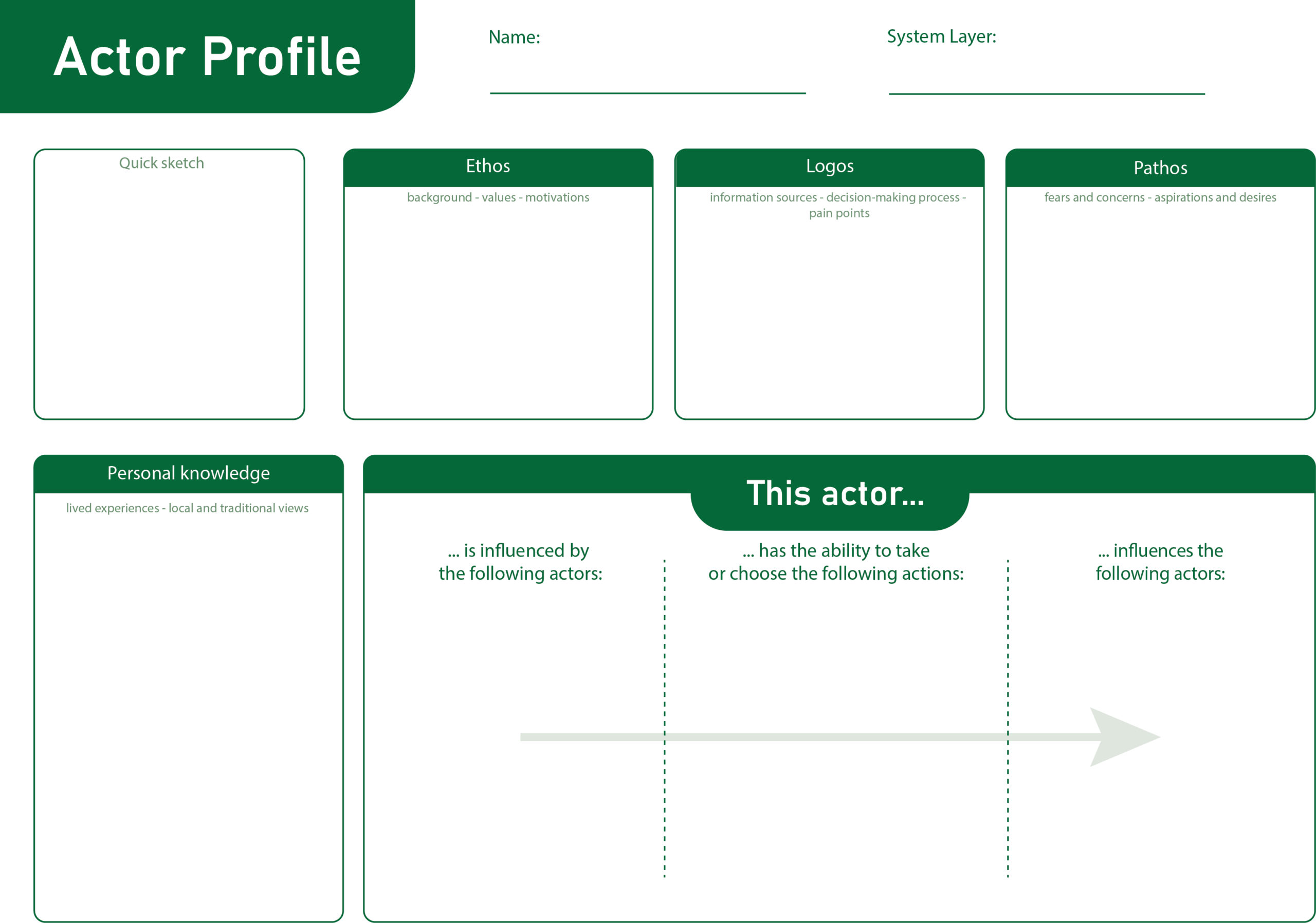
These encounters will be added to a Noticing Map, showing a multidimensional representation of both human and more-than-human actors in the socio-ecological system. Using this critical map the participants remap the actors on the materialisation and simplification of the system using the circular tool. The tool also allows to map the relations between the actors through the concept of agency. Finally, the Actor Profiles support the creation of deeper understanding of the different actors in the system and their relations.


Activity 3: Speculative Reimagining
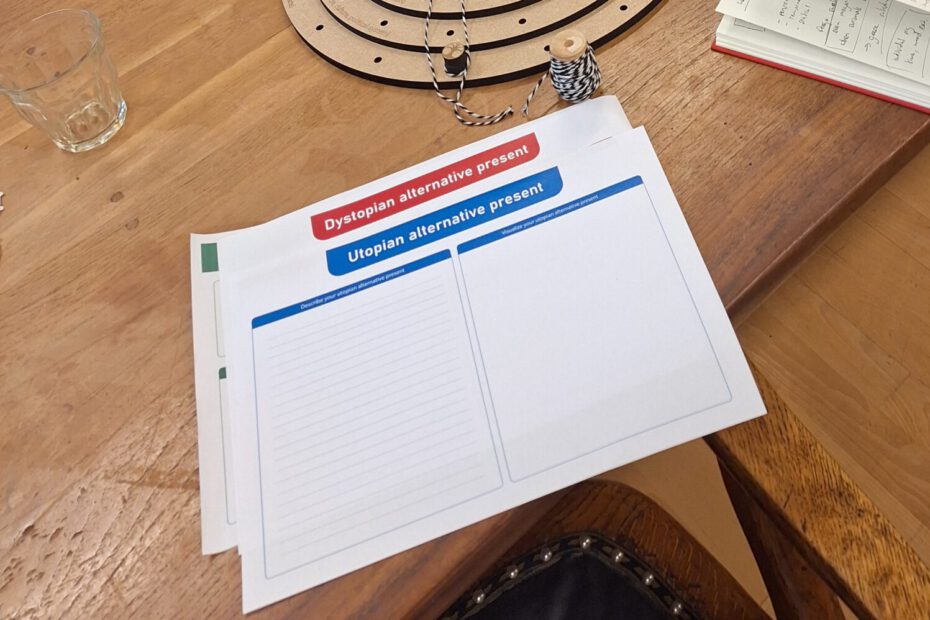
Using the mapping, the group selects one dynamic between actors based on what is most interesting. Using these actors and relations, participants create a dystopian alternative present and a utopian alternative present. The session is ended through discussing what steps can be taken to move more toward the utopia and more away from the dystopia.