Skip to content

Systemic Explorer / Speculative Envisioner / Strategic Planner

"Minor key" & More than Human Design

Collaboration: Ludger van Dijk (empirical philosopher)

Design Research Project - 2023

Exploring the Minor Key in both the Design Process and Design within a More-than-human Context

This study aims to support designers in understanding and using the minor key in their design processes. The minor key approach, which emphasizes open-endedness and unpredictability, offers valuable insights for tackling complex problems. An autoethnographic research method was conducted, involving a minor key design process in a more-than-human context. Three design concepts were developed through discussions with a philosopher and theoretical readings, and the process was documented through reflective notes. These notes, together with showroom discussions, were analysed and generalized as findings for the design community. 

Ecological UX / Ecological systems integration in design / Open-ended interaction design / Autoethnographic research

Approach

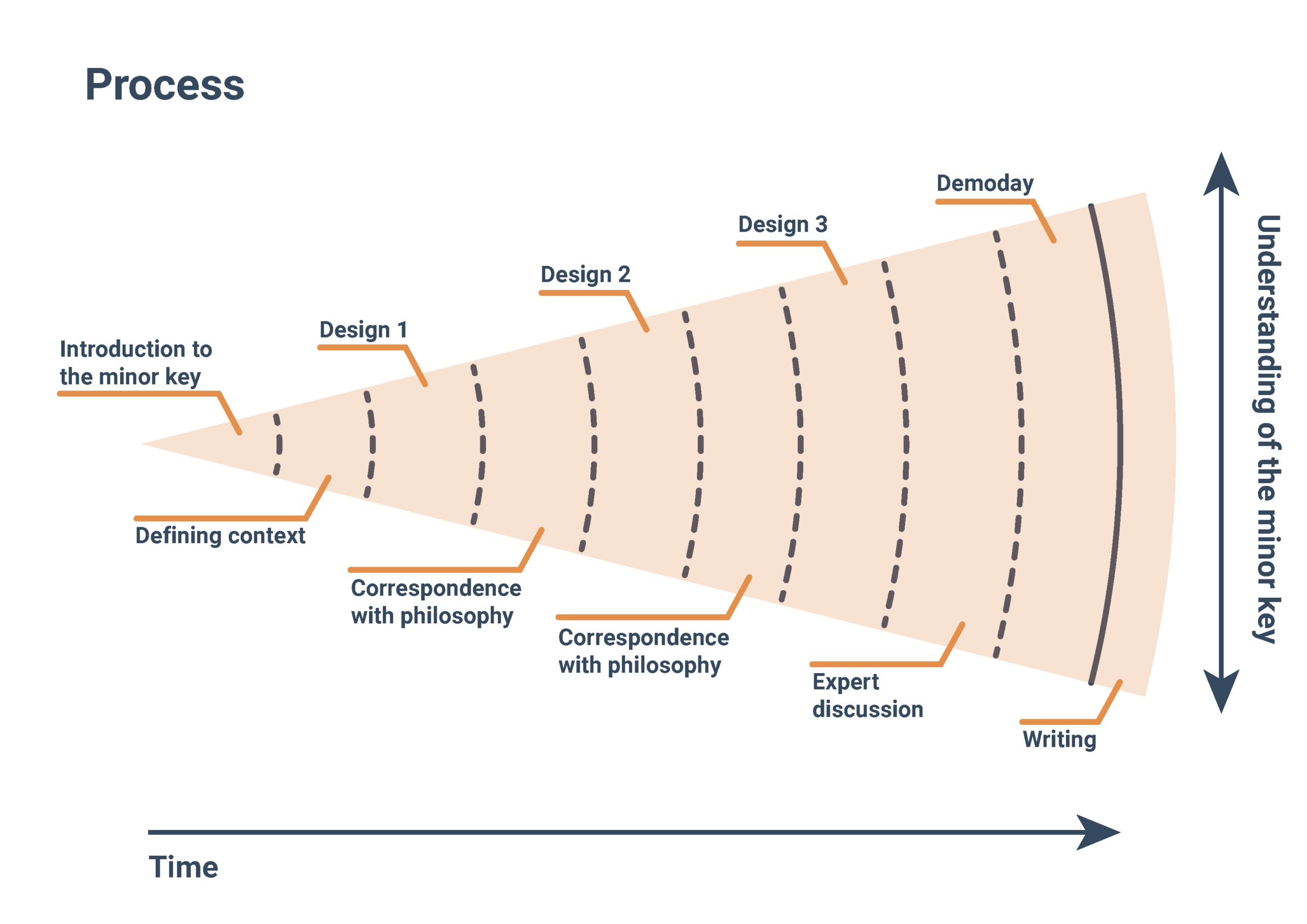
The research was structured to have a Design Philosophy Correspondence approach consisting of a total of six phases, three of them focussing on theory, and three on design. After each design phase, an expert philosopher was involved in the research through open discussions to reflect on both the theory and the application of the theory in the design, as well as share insights for further opportunities.

The Minor Key

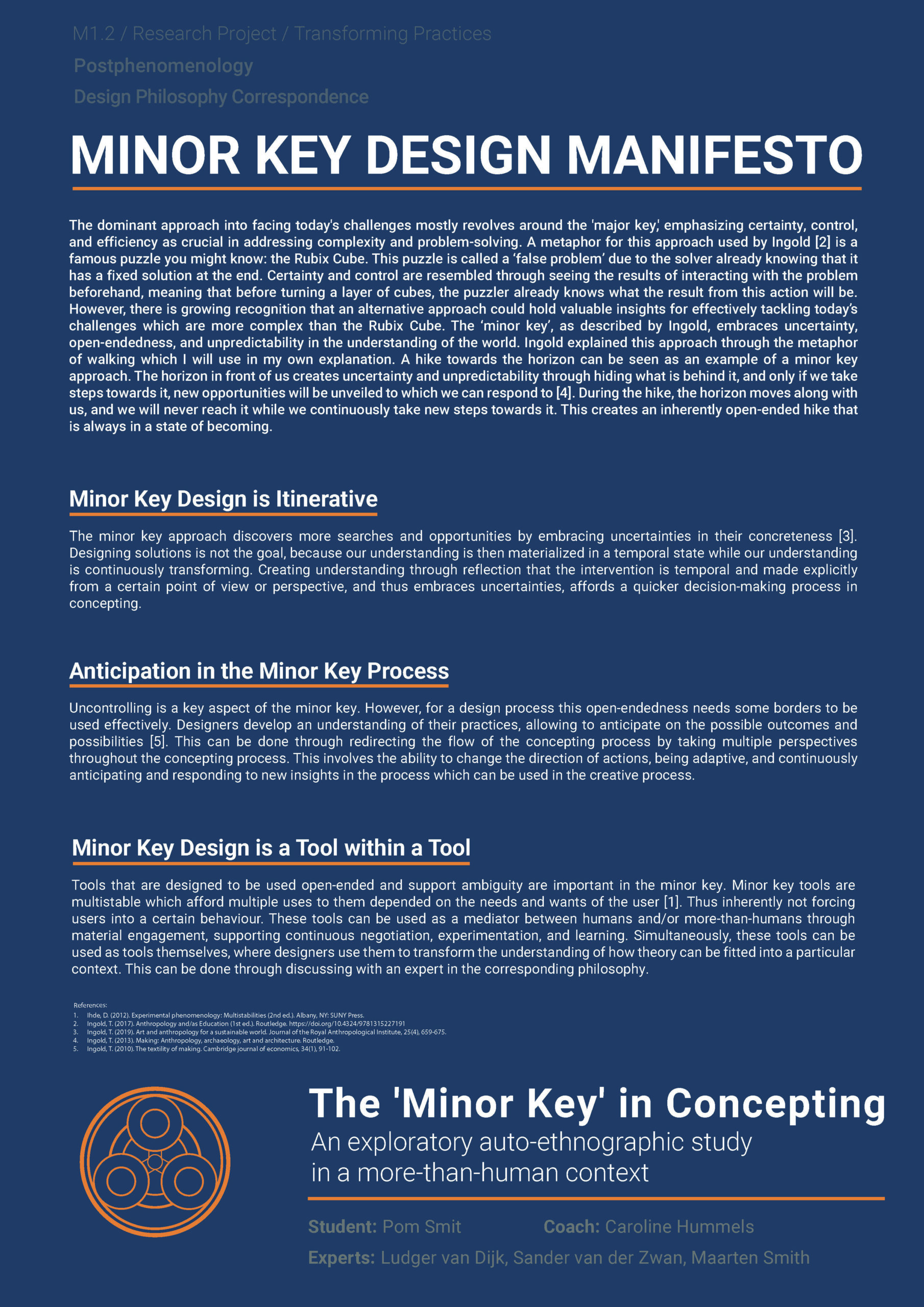
The minor key approach challenges the dominant design mindset that prioritizes control, certainty, and efficiency, arguing instead for an open-ended, interconnected way of engaging with the world.


Drawing on the work of Ingold, Deleuze, and Guattari, this perspective embraces ambiguity, variation, and continuous becoming, suggesting that problems are never fixed but always shifting within complex ecological and social systems. Rather than seeking to narrow toward predetermined solutions, the minor key encourages designers to stay receptive, to correspond with their environments, and to let research unfold itineratively, moving with the world rather than attempting to control it.


Ingold’s view of sustainability reinforces this, framing it not as a final destination but as an ongoing, adaptive process rooted in our historical ability to respond to and evolve with our surroundings. For designers, adopting the minor key means intentionally designing with uncertainty, openness, and relationality, positioning design as a practice that supports continual transformation rather than one that imposes closure.
Design 1

Through an intuitive inquiry process, I refined my broad interest in environmental sustainability into a more tangible design context by revisiting a personal experience: building a birdhouse. Recognizing its alignment with my skills as an industrial designer, I reframed the birdhouse as a site for design research and concept development, which ultimately became the core of the project. 


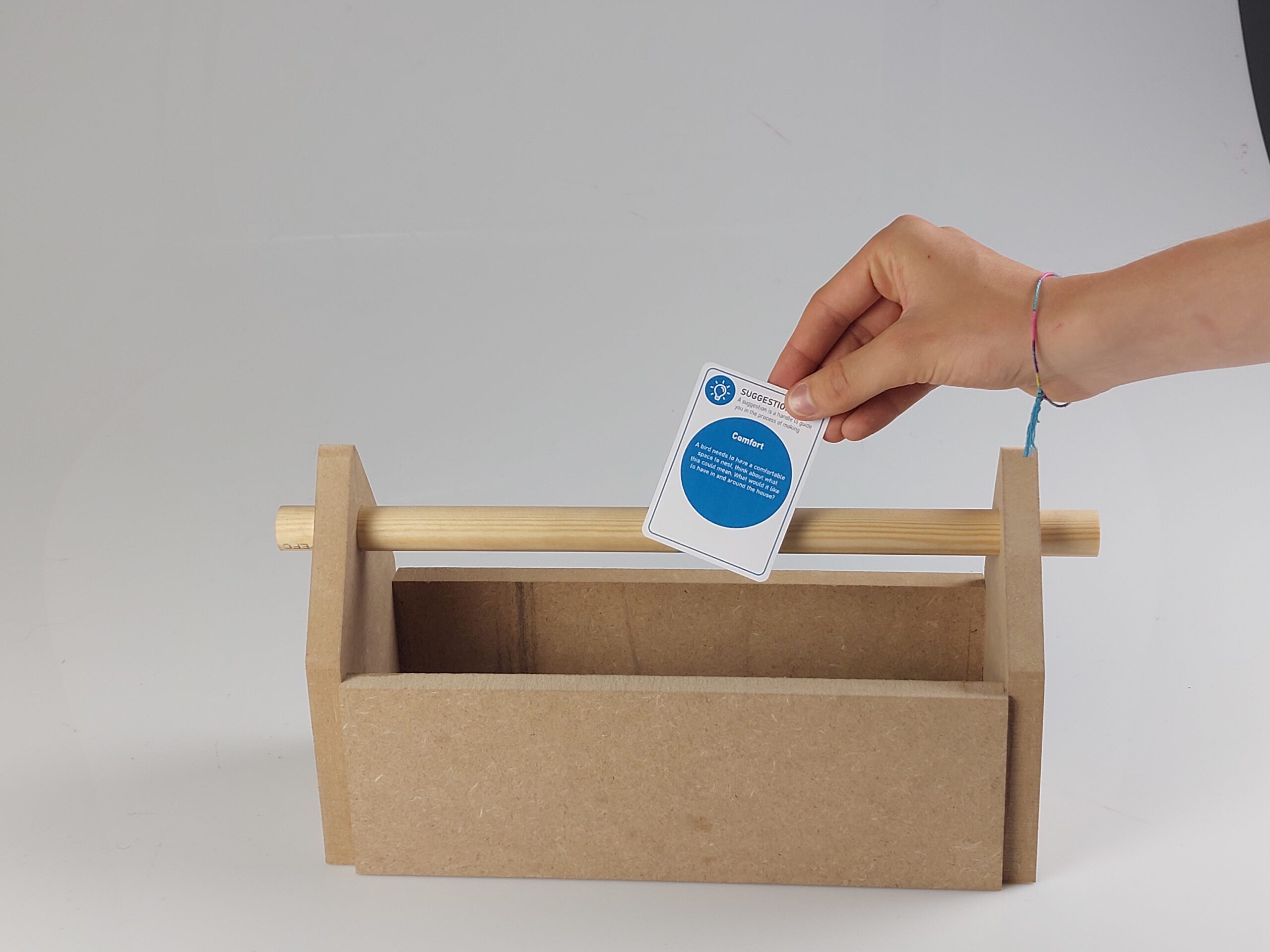
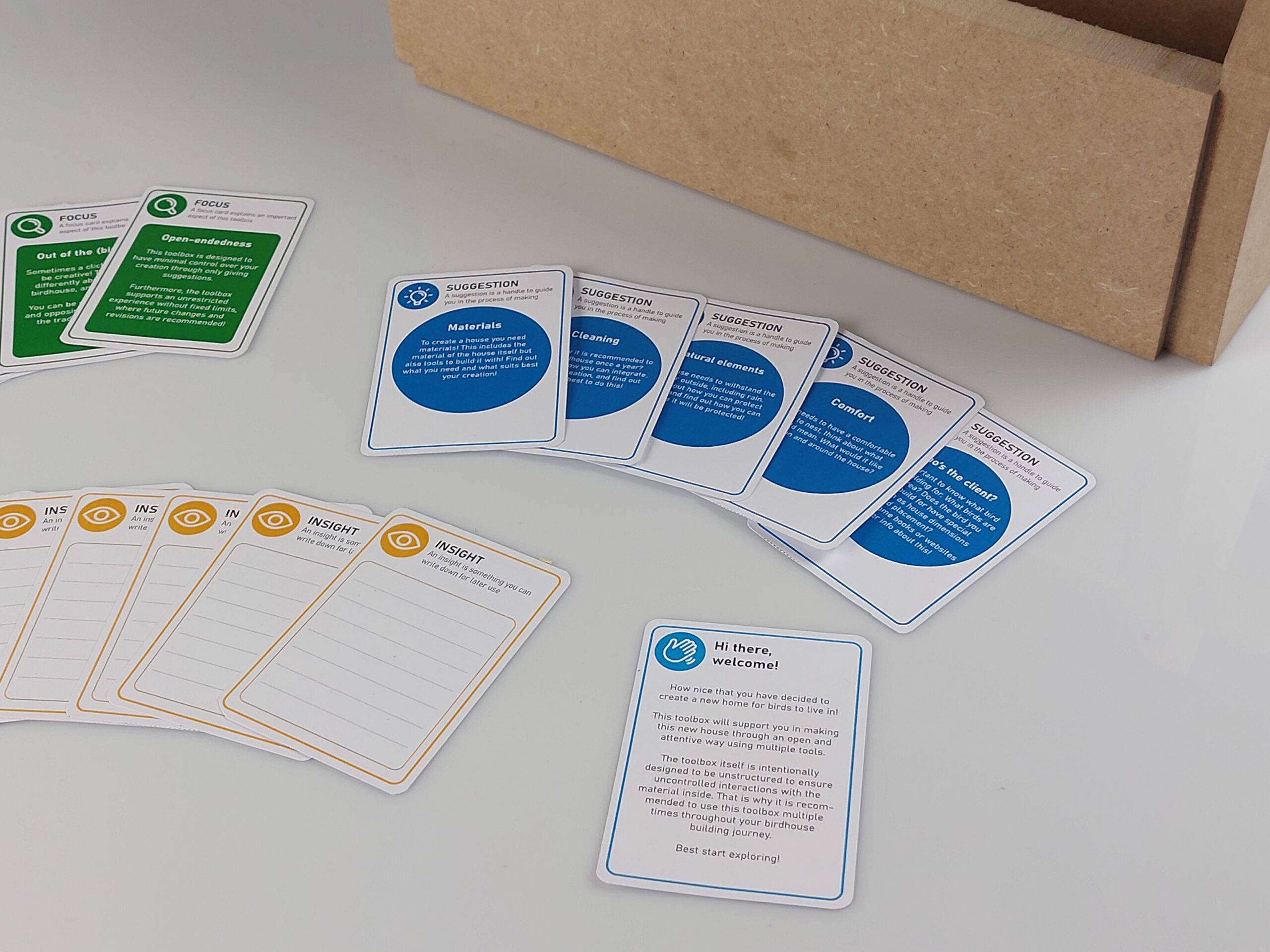
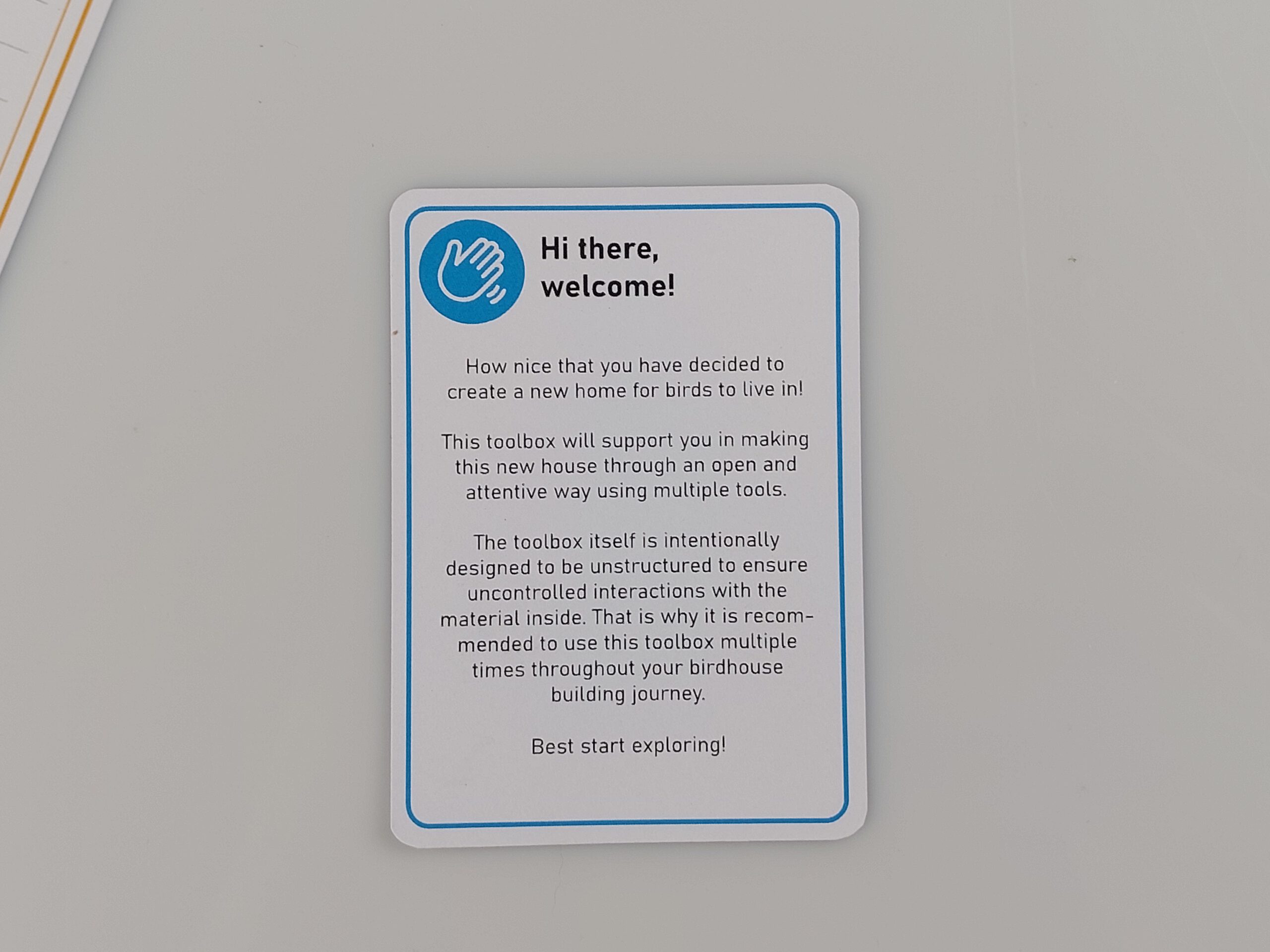
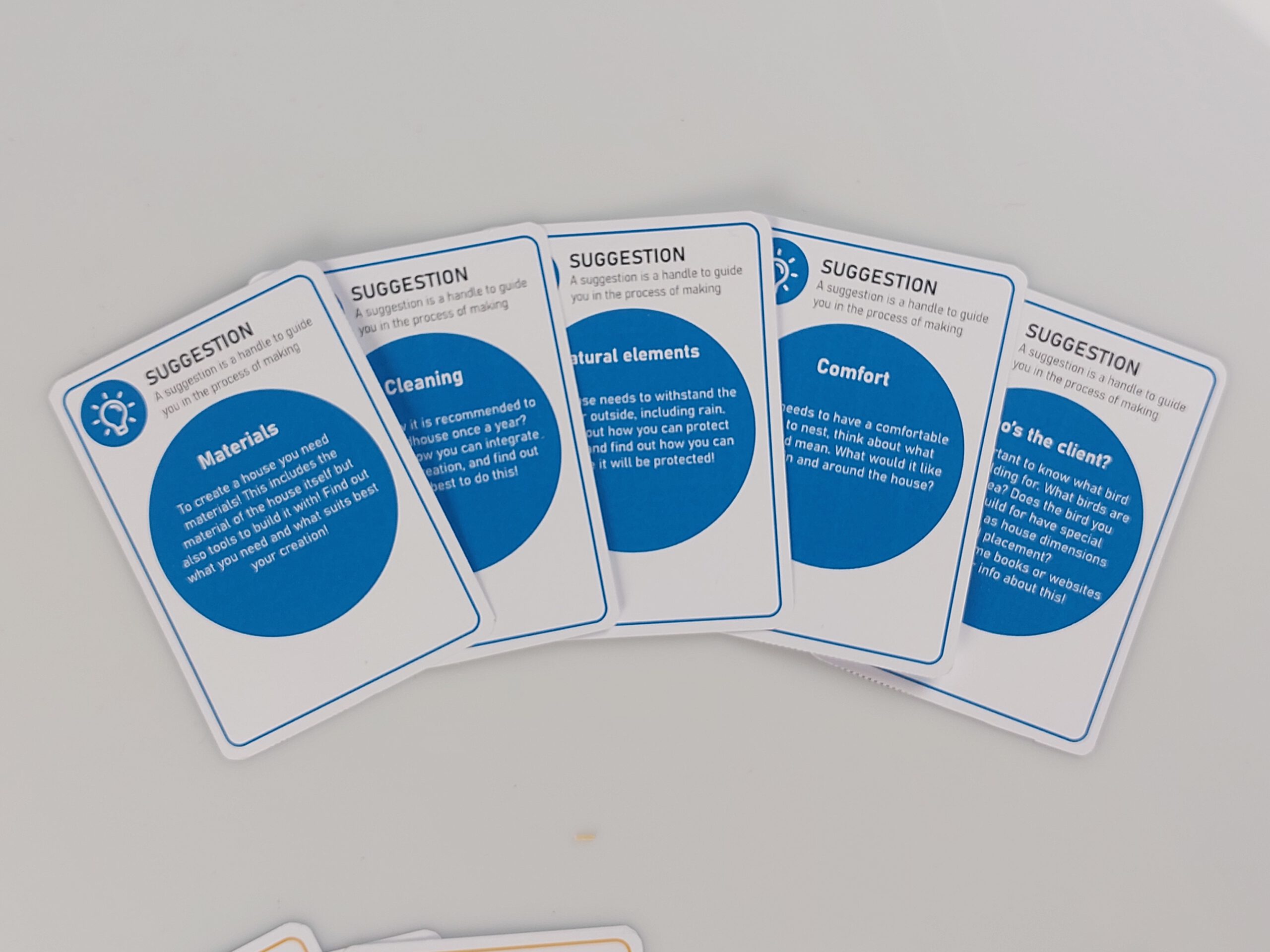
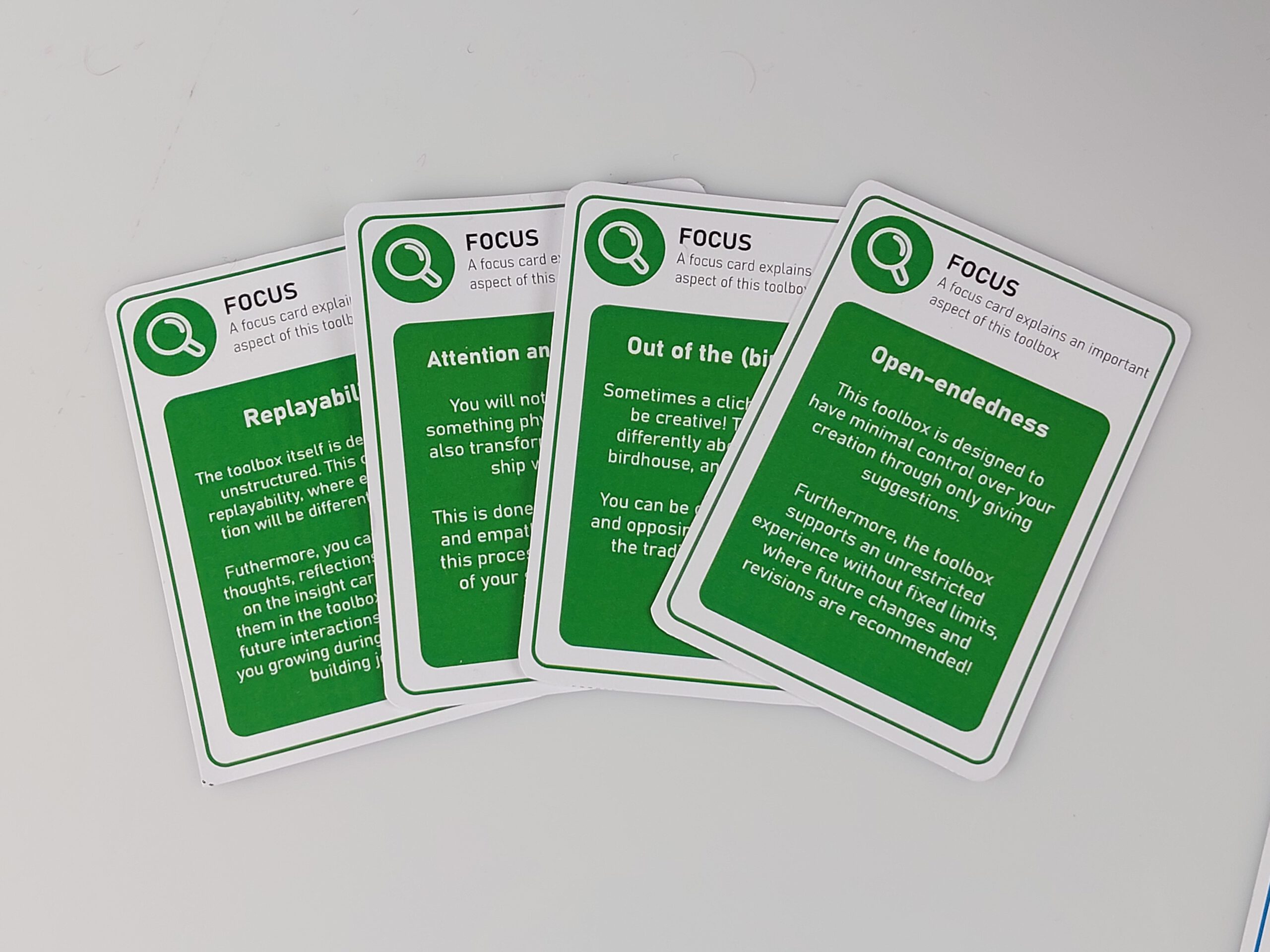
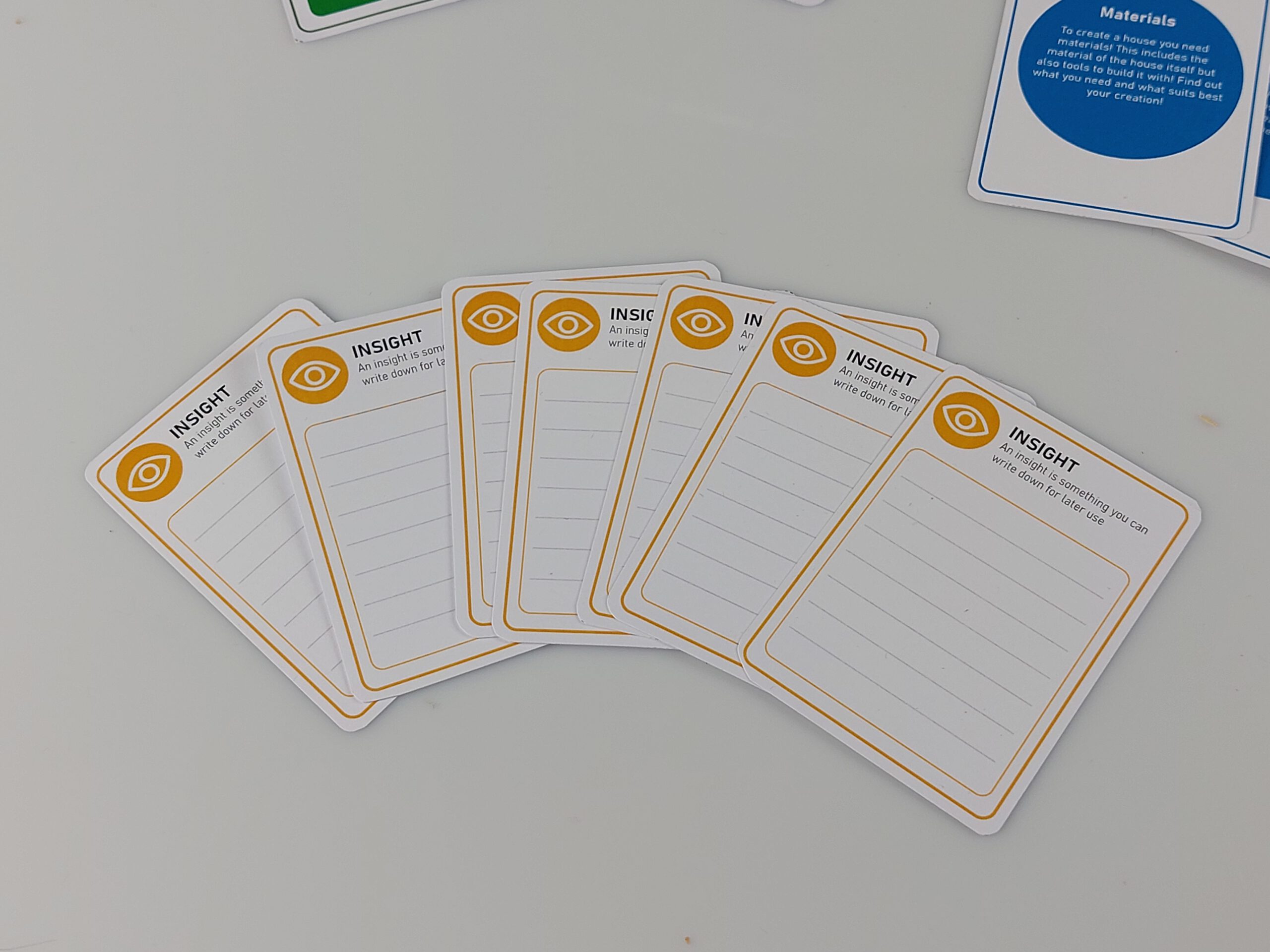
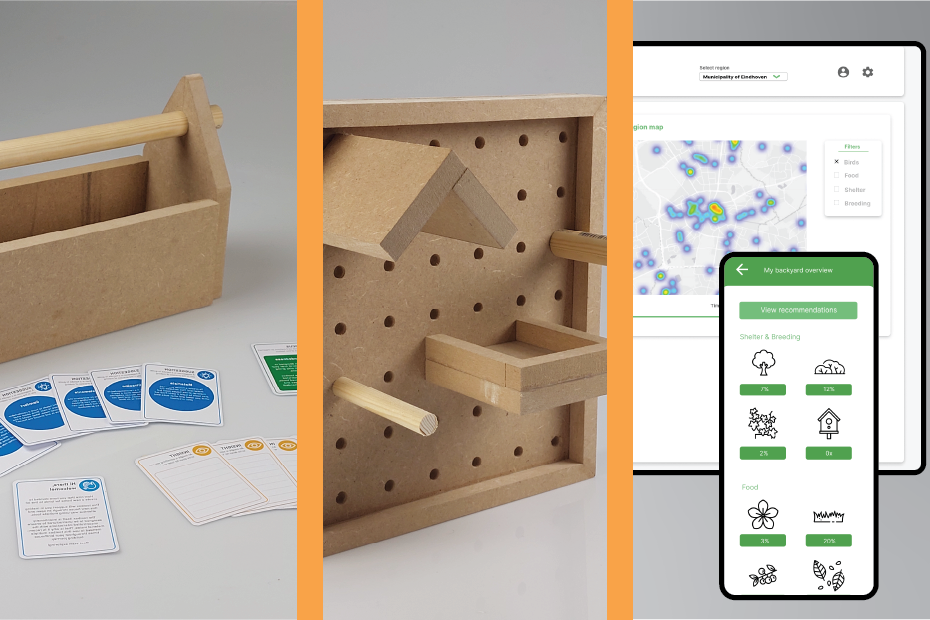
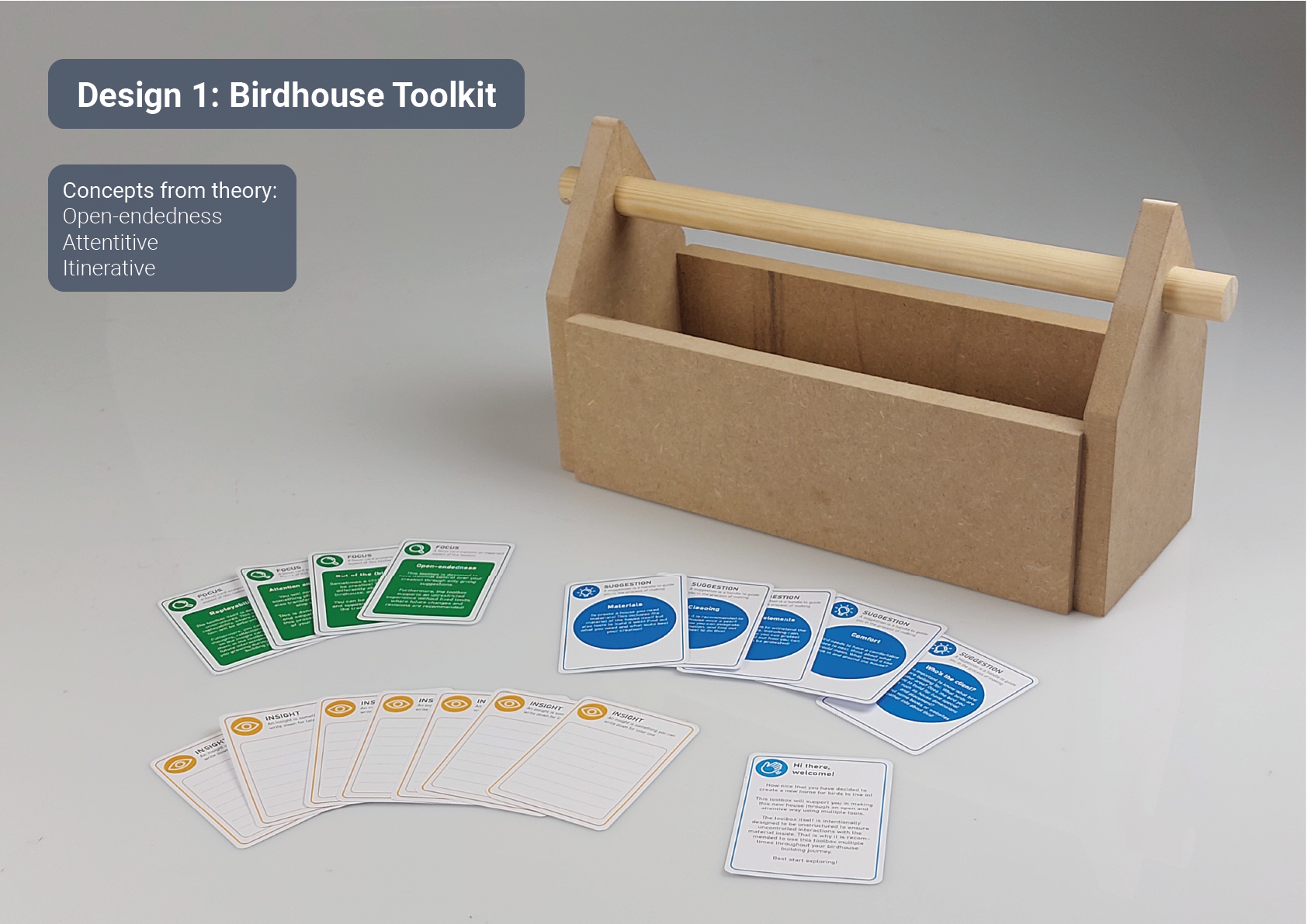
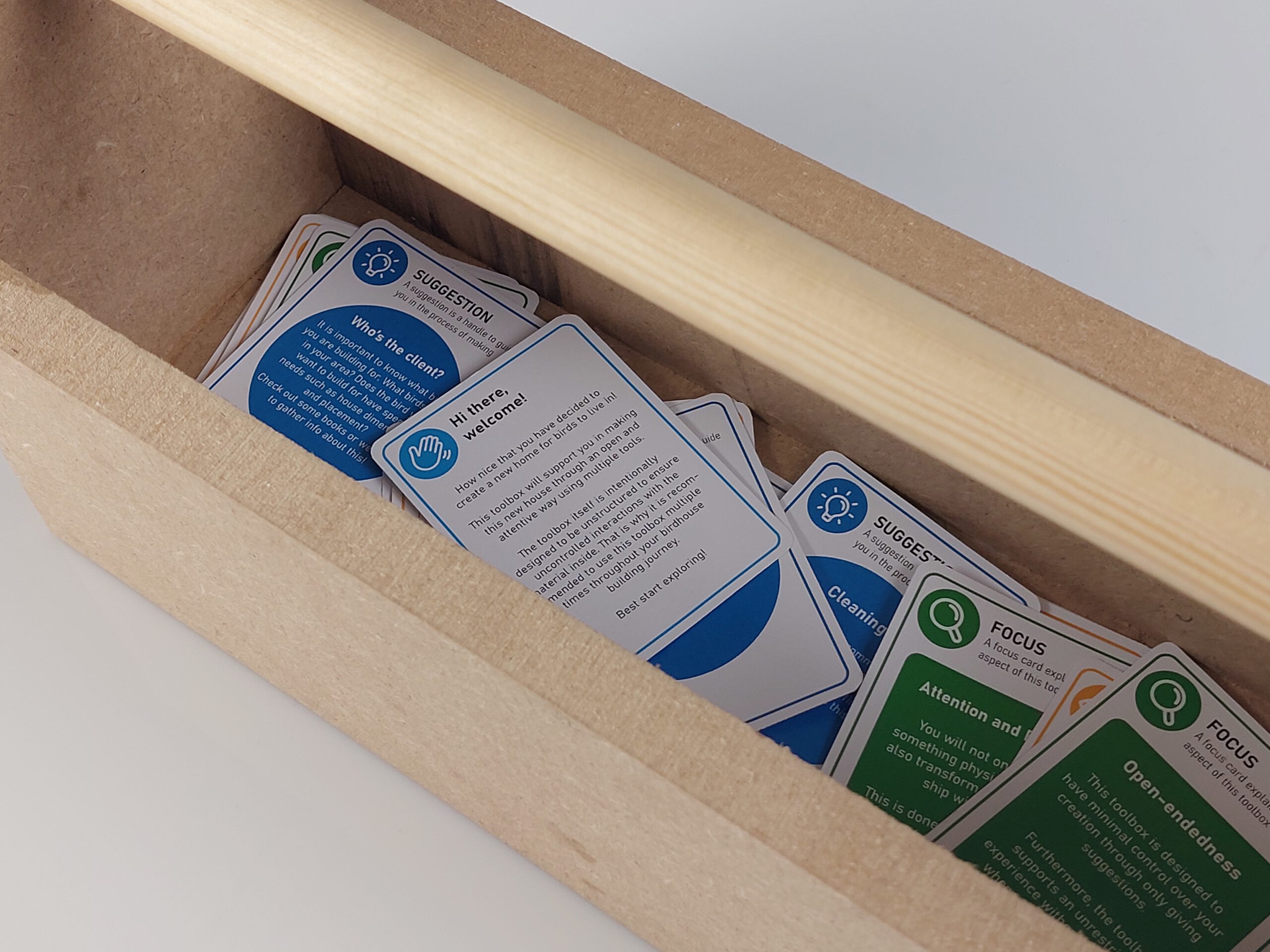
I translated theoretical requirements—generosity, open-endedness, comparison, and criticality—into a functional design through the creation of the Birdhouse Toolkit, a hands-on system that encourages users to meaningfully engage with garden birds. I designed each component of the toolkit, including focus cards, suggestion cards, and insight cards, to guide users through researching bird needs, exploring multiple possible solutions, reflecting on their experiences, and developing unintentional, emergent designs. 

Design 2

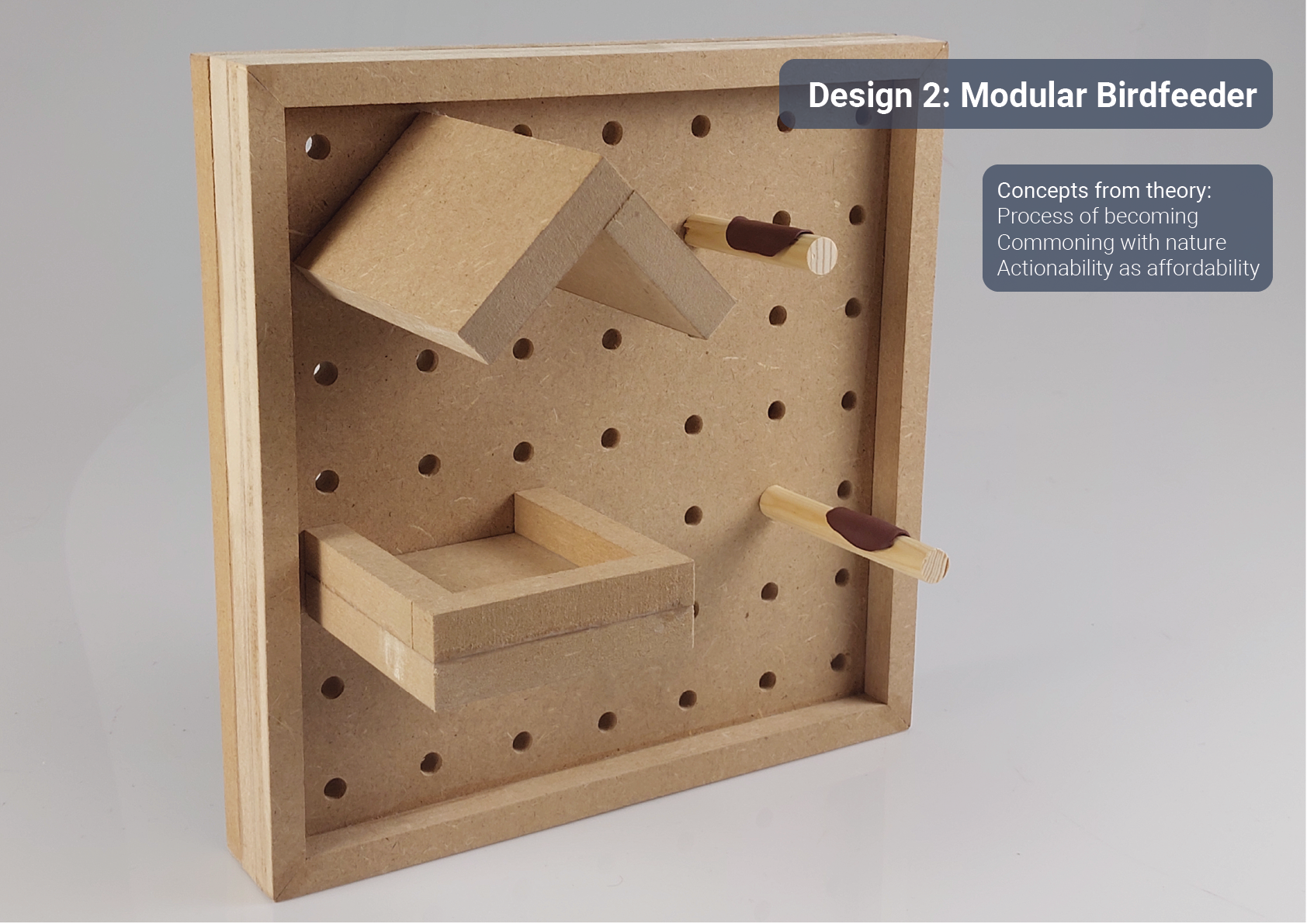
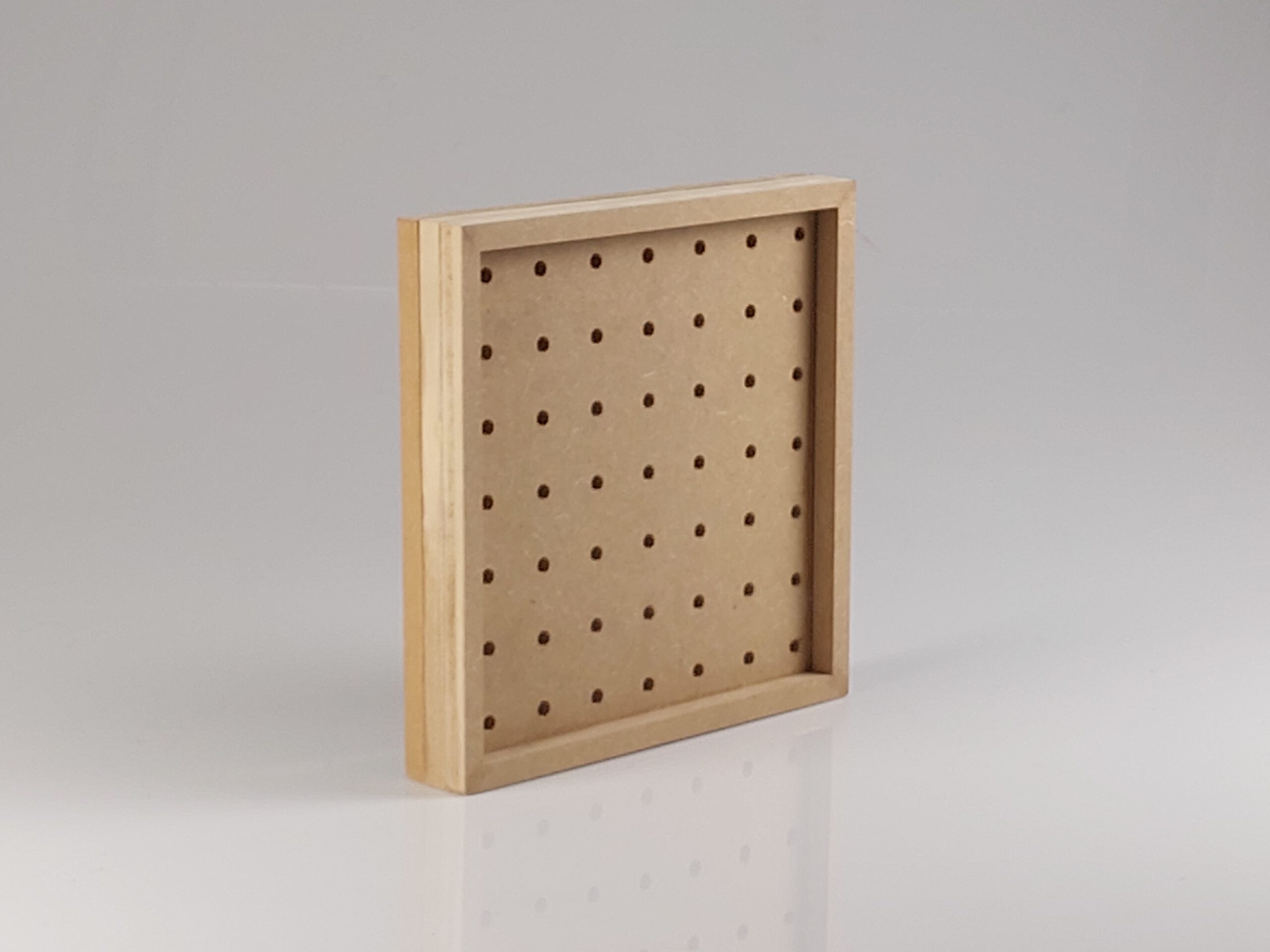
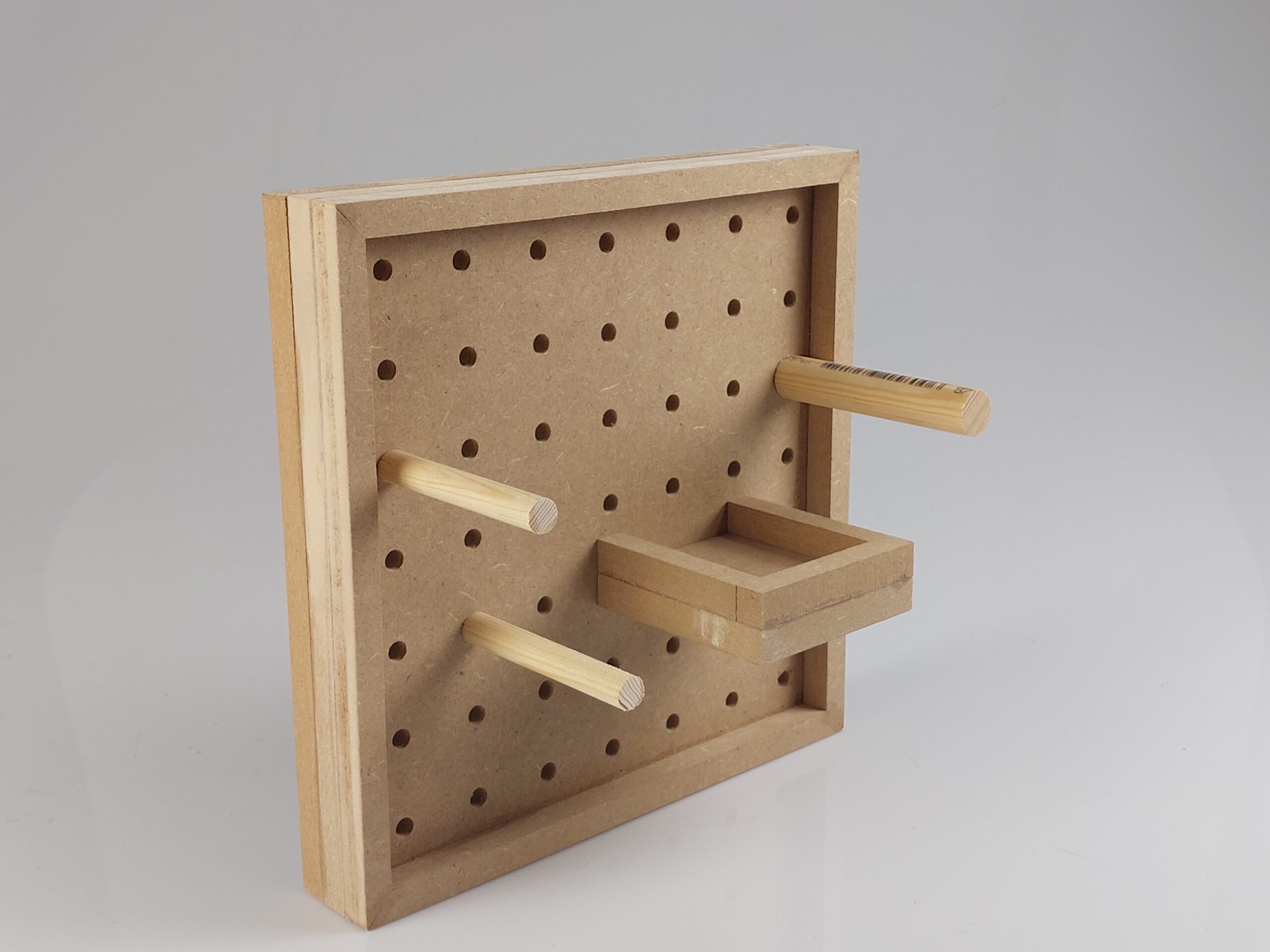
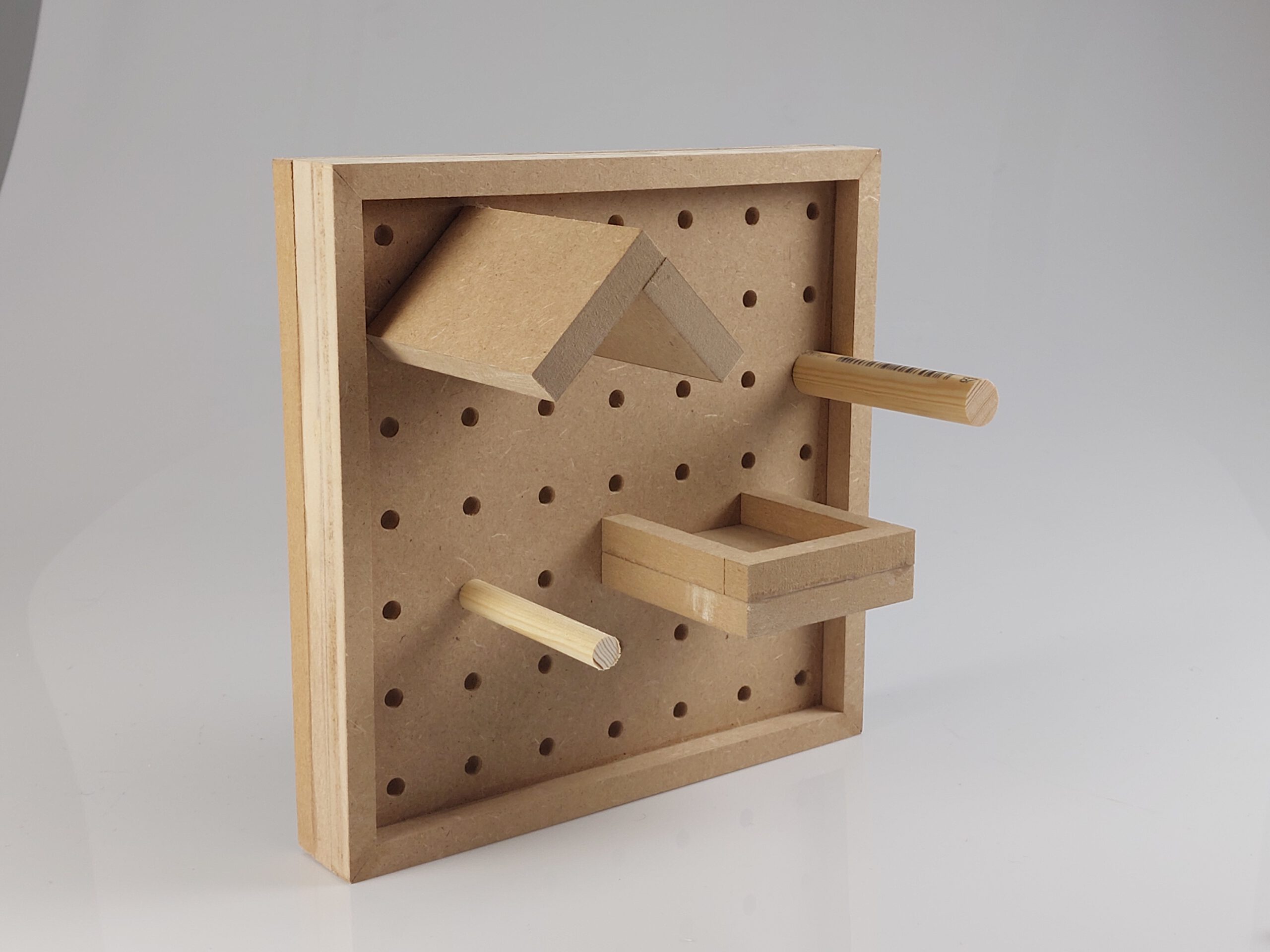
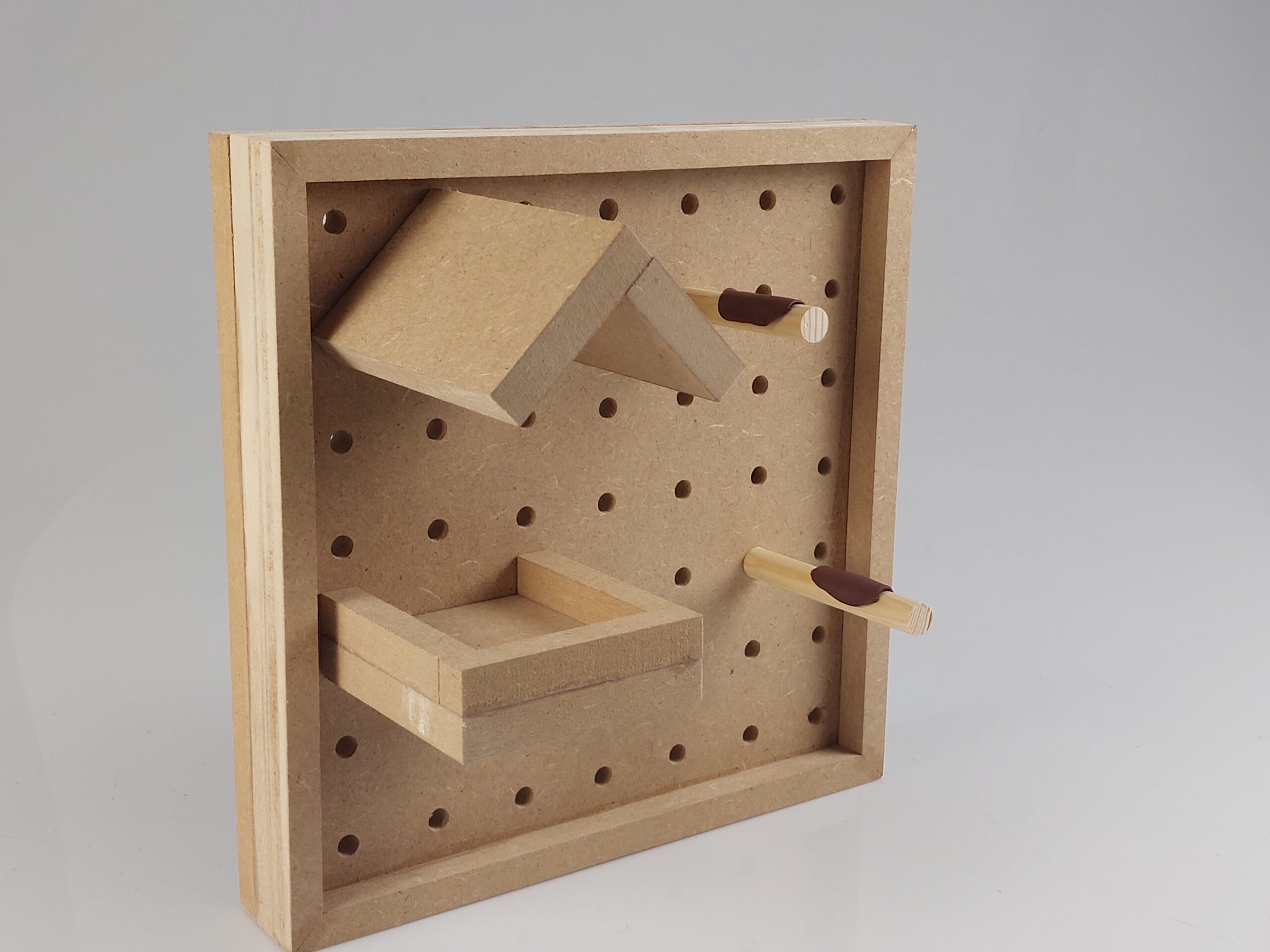
I redirected the project by designing an experimental modular feeding station that gives tools not only to humans but also to birds themselves.


Using soft, traceable materials, I aimed birds to leave imprints that communicate their behaviour, allowing humans to respond in a reciprocal, interpretive exchange.


This concept explored affordances, bioinclusive design, and co-construction by creating modules that encourage negotiation, learning, and shared agency between species. 

Design 3

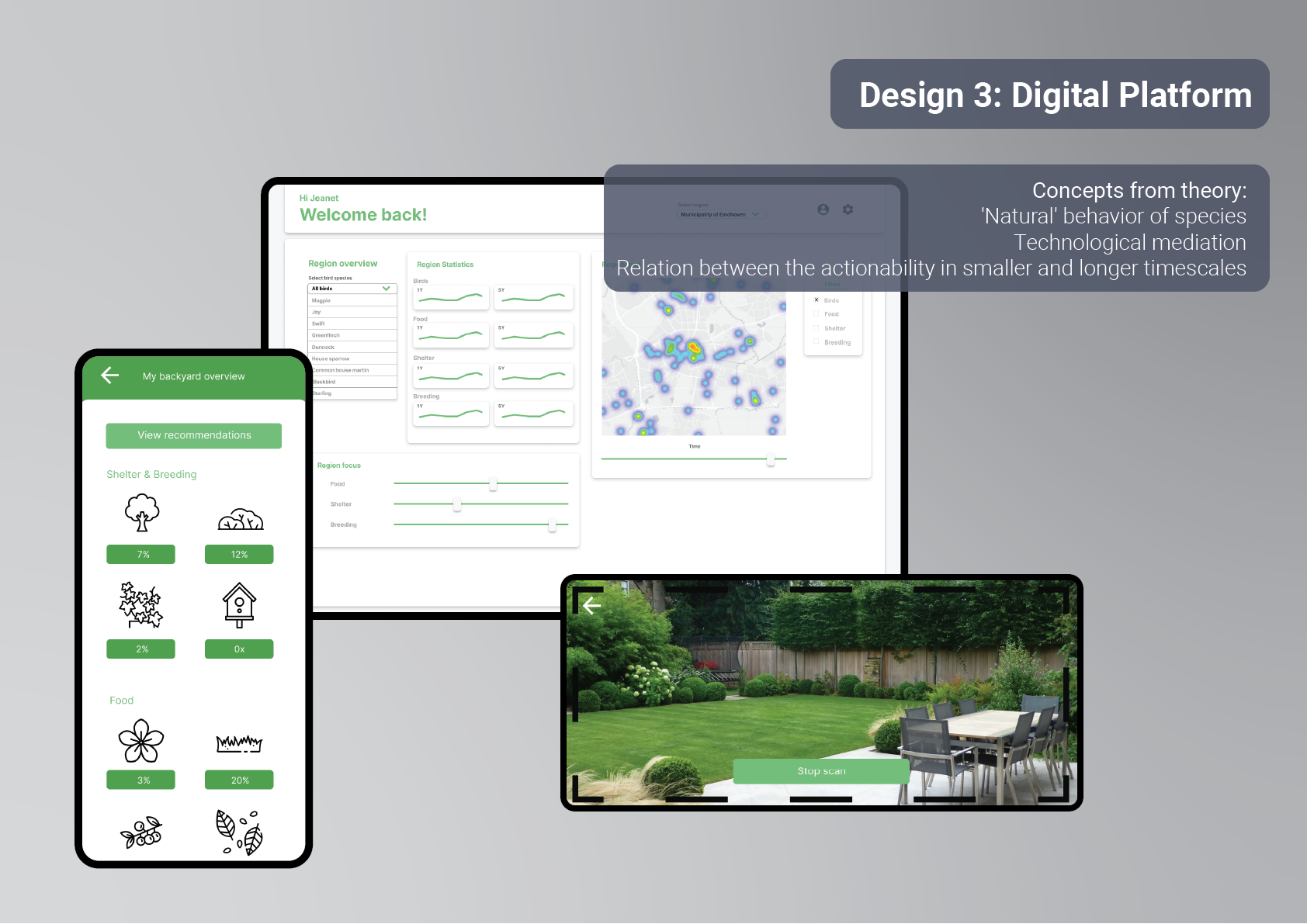
Building on earlier material-based concepts, I investigated how data and AI could support ecological interactions by capturing and interpreting birds’ evolving, “natural” behaviours.


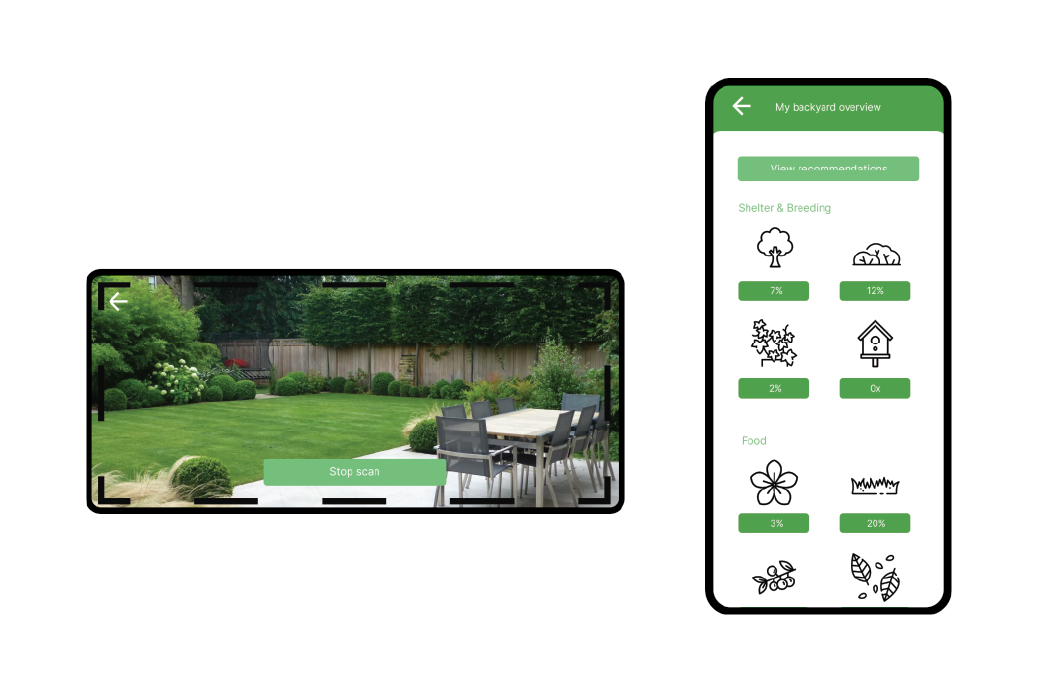
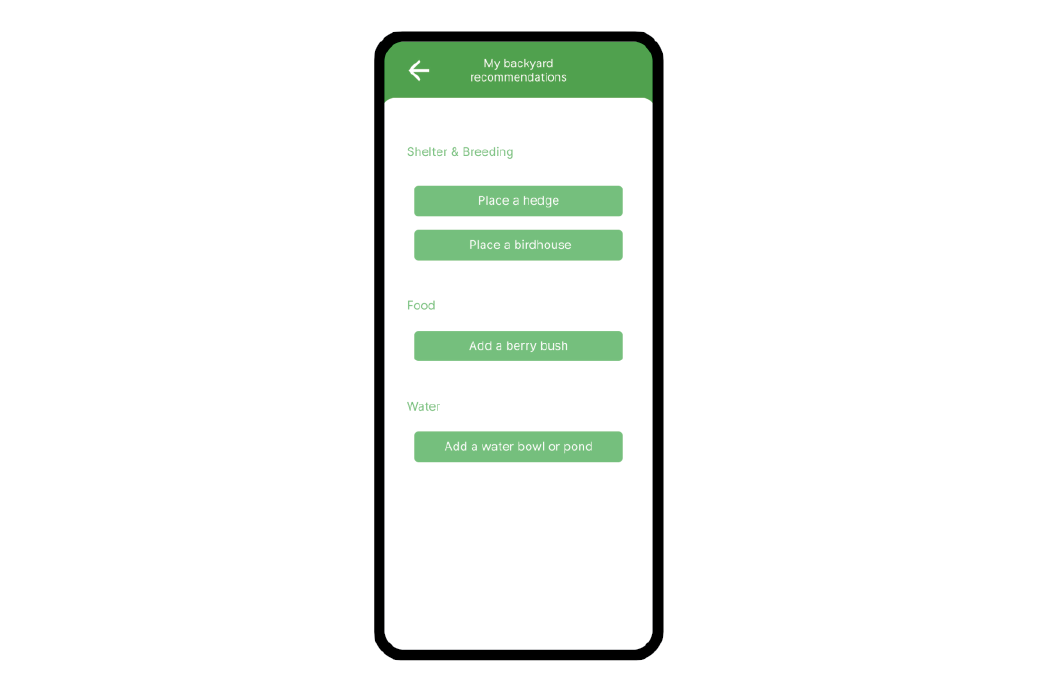
I designed a digital ecosystem concept in which users scan their gardens to map natural affordances, enabling an AI system to generate tailored, context-sensitive recommendations that sustain local bird life. 


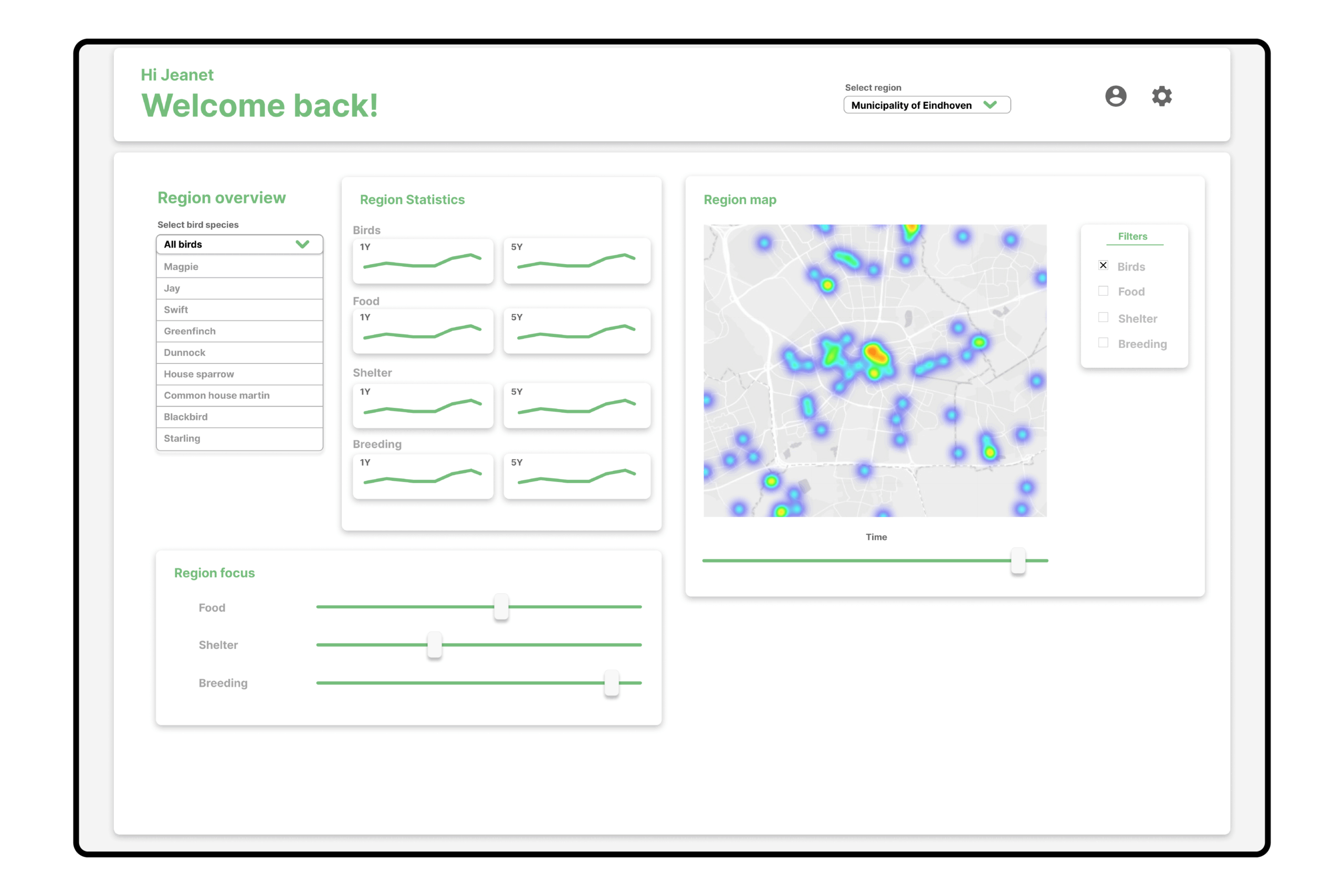
To ensure ecological responsibility over longer timescales, I incorporated expert oversight through a monitoring dashboard, blending automated insights with human expertise.